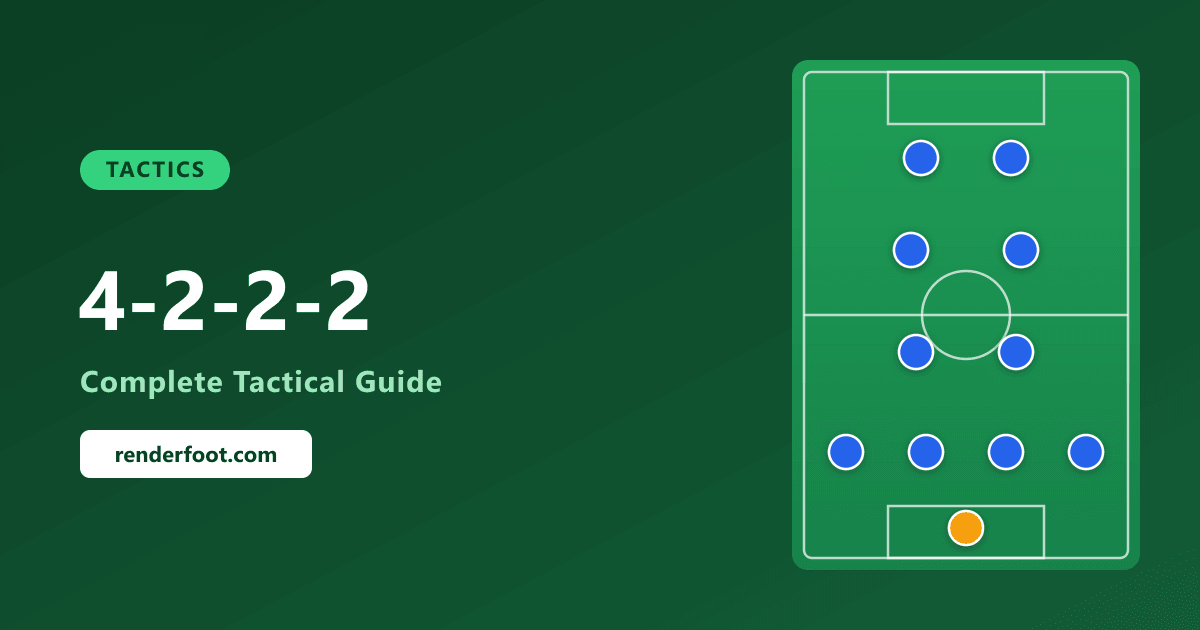
The 4-2-2-2 is a narrow, central-overload formation: a back four, a double pivot of two defensive midfielders, two attacking midfielders in the half-spaces, and two strikers. It dominates the centre of the pitch and relies on the full-backs for width — and when used correctly, it can overwhelm opponents through the middle.
It's also one of football's most misunderstood formations, often confused with a narrow 4-4-2 or a diamond midfield. This complete guide breaks down its structure, player roles, strengths, weaknesses, and the famous teams that mastered it.
What Is the 4-2-2-2 Formation?
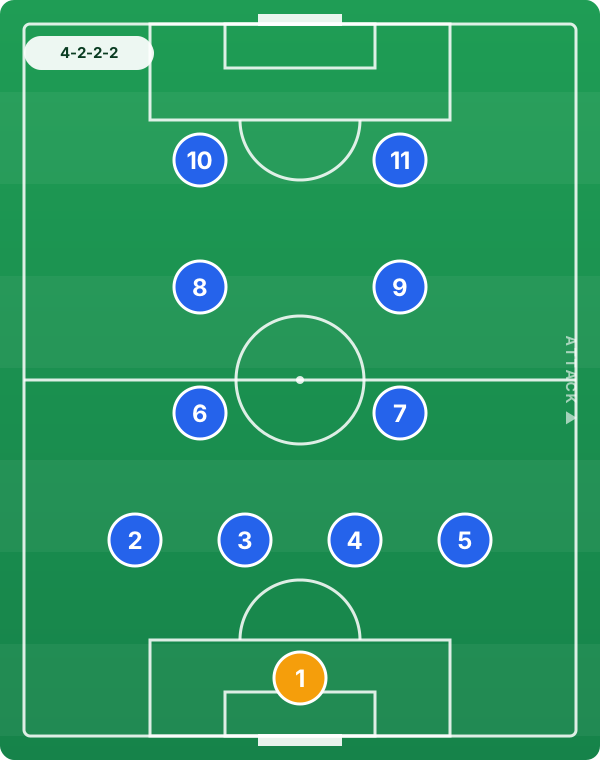
The 4-2-2-2 lines up with:
- 4 defenders — a standard back four (2 centre-backs, 2 full-backs)
- 2 defensive midfielders — sitting in front of the defence to shield and distribute
- 2 attacking midfielders — playing between the lines to create chances
- 2 strikers — a front pair that combines and stretches the opposition
The key characteristic is central overload. Unlike wide formations like the 4-3-3, the 4-2-2-2 funnels play through the middle, relying on full-backs to provide width.
Player Roles Explained
Full-Backs: The Width Providers
In a 4-2-2-2, your full-backs are critical. Since there are no natural wingers, full-backs must overlap aggressively to stretch the defence. Think of them as wing-backs in all but name.
Double Pivot (2 Defensive Midfielders)
The two holding midfielders form a double pivot. One typically sits deeper (the anchor), while the other has more freedom to step forward and press. Together, they:
- Screen the back four
- Recycle possession
- Launch attacks with progressive passes
Attacking Midfielders (The Number 10s)
This is where the 4-2-2-2 gets creative. Two attacking midfielders play between the opposition's midfield and defence — the dreaded "half-spaces." They drift, rotate, and find pockets of space that are nearly impossible to mark.
Strike Partnership
Two strikers allow for classic partnerships — one who drops deep to link play, one who stretches the line. Or two mobile forwards who interchange constantly.
Strengths of the 4-2-2-2
1. Central Dominance
With 6 players occupying the central corridor (2 DMs + 2 AMs + 2 STs), the 4-2-2-2 overwhelms opponents in the most dangerous areas of the pitch.
2. Defensive Solidity
The double pivot provides a natural shield. When the team loses possession, the two DMs immediately cut passing lanes, making counter-attacks harder for the opponent.
3. Passing Triangles Everywhere
The vertical structure creates natural passing triangles between DM–AM–ST on both sides. This makes it easy to play quick combination football through the middle.
4. Overloading the Box
With two strikers and two attacking midfielders arriving late, you can get 4 players into the box for crosses from overlapping full-backs.
Weaknesses of the 4-2-2-2
1. Vulnerable on the Flanks
The biggest risk. Without natural wingers, the wide areas are exposed. If full-backs push up and the ball is turned over, the space behind them is a highway for opposition wingers.
2. Full-Back Fitness Demands
Your full-backs need elite stamina. They're responsible for defensive duties AND providing all the width in attack. Fatigue in the second half is a real concern.
3. Can Become Too Narrow
Against teams that sit deep with a low block, the central congestion can work against you. With all your creators in the middle, there's limited space to operate.
4. Requires Technical Midfielders
The attacking midfielders must be comfortable receiving the ball under pressure in tight spaces. This isn't a formation for players who need time on the ball.
Famous Teams That Used the 4-2-2-2
Claudio Ranieri's Leicester City (2015-16)
Perhaps the most famous modern example. Leicester's title-winning side effectively played a 4-2-2-2 / 4-4-2 diamond:
- Kanté & Drinkwater as the double pivot
- Mahrez & Albrighton as the wide-cutting attacking mids
- Vardy & Okazaki up front
The compact shape and devastating counter-attacks shocked the Premier League.
Diego Simeone's Atlético Madrid
Simeone has frequently deployed narrow formations. His 4-2-2-2 variants use aggressive pressing from the front pair while the midfield four form an impenetrable block.
Marcelo Bielsa's Various Teams
Bielsa's "crazy diamond" at Leeds and other clubs often resembled a 4-2-2-2, with intense man-marking and vertical passing as core principles.
When to Use the 4-2-2-2
Use it when:
- You have technically gifted central midfielders
- Your full-backs are fit and attack-minded
- The opposition plays with a single pivot (you'll outnumber them centrally)
- You want to dominate possession in central areas
Avoid it when:
- The opposition has fast, dangerous wingers
- Your full-backs lack the fitness to cover both flanks
- You're playing on a very wide pitch with space on the flanks
- The opponent sits in a deep low block
4-2-2-2 vs. Similar Formations
The quickest way to understand the 4-2-2-2 is to see it next to the two systems it's most often confused with. Notice how the 4-2-2-2 keeps everything central, while the 4-4-2 and 4-3-3 push players wide:
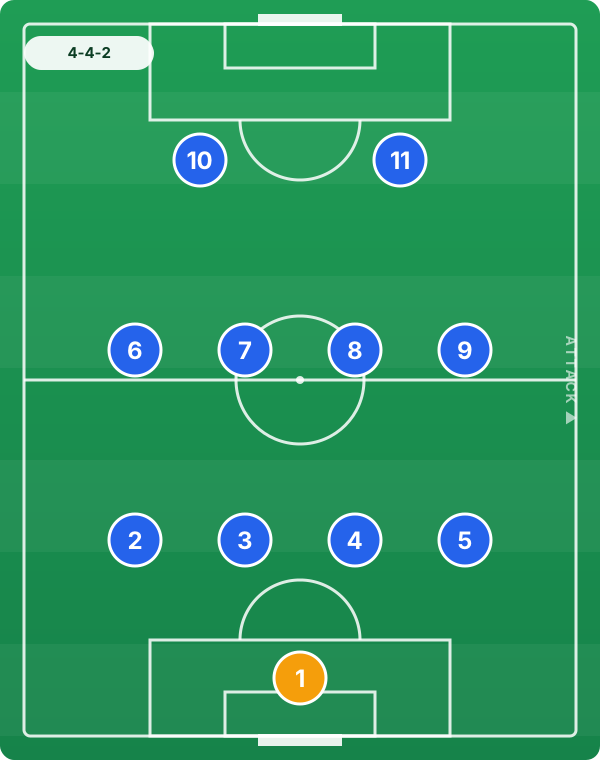
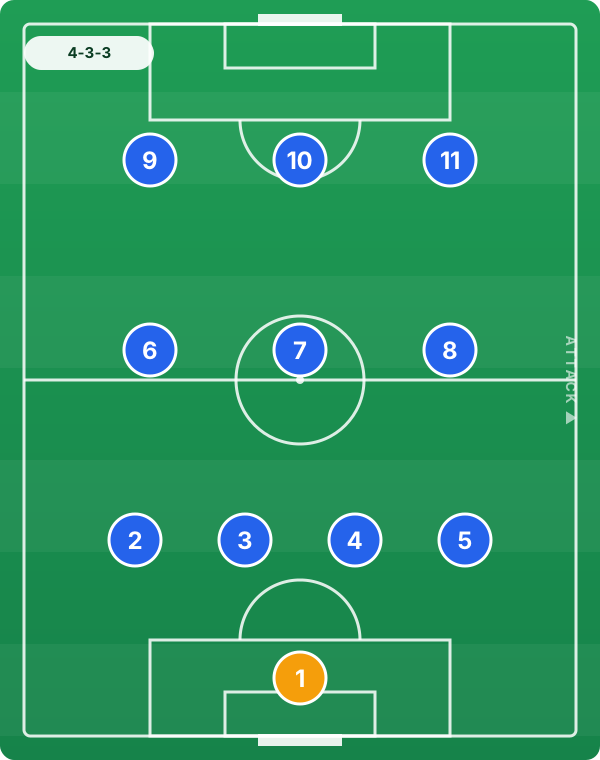
| Feature | 4-2-2-2 | 4-4-2 Flat | 4-3-3 |
|---|---|---|---|
| Width | Full-backs only | Wingers + full-backs | Wingers |
| Central presence | Very strong | Moderate | Moderate |
| Defensive cover | Double pivot | Flat midfield 4 | Single/double pivot |
| Counter-attack | Excellent | Good | Good |
| Creativity zone | Between lines | Wide areas | Half-spaces + wings |
Frequently Asked Questions
What is the 4-2-2-2 formation?
The 4-2-2-2 is an 11-a-side formation with a back four, two defensive midfielders (a double pivot), two attacking midfielders, and two strikers. Its defining feature is central overload — six players occupy the middle of the pitch, with the full-backs providing all the width.
Is the 4-2-2-2 the same as a 4-4-2 diamond?
No. A 4-4-2 diamond has one defensive midfielder, two central midfielders, and one attacking midfielder (a 1-2-1 midfield diamond). The 4-2-2-2 uses a flat double pivot of two holding midfielders with two attacking midfielders ahead of them — a squarer, more vertical midfield box.
What are the weaknesses of the 4-2-2-2?
Its main weakness is the flanks. With no natural wingers, the wide areas are exposed if attacking full-backs are caught upfield. It also demands very fit full-backs and can become too narrow against a deep, compact low block.
What teams play the 4-2-2-2?
It's most associated with Claudio Ranieri's title-winning Leicester City (2015-16), Diego Simeone's Atlético Madrid, and Marcelo Bielsa's high-intensity sides. It's also a staple in Brazilian and German football.
Try It Yourself
Want to visualize the 4-2-2-2 with your own players? Use our free formation builder to create your lineup, customize team colors, add player photos, and download as a PNG.
You can also explore all football formations to compare tactical systems side by side, or — if you play a smaller format — see our best small-sided formations guide for 5v5 through 9v9 setups.
The 4-2-2-2 rewards teams with technical quality in central areas and athletic full-backs. It's not the easiest formation to master, but when it clicks, the central overload is devastating.