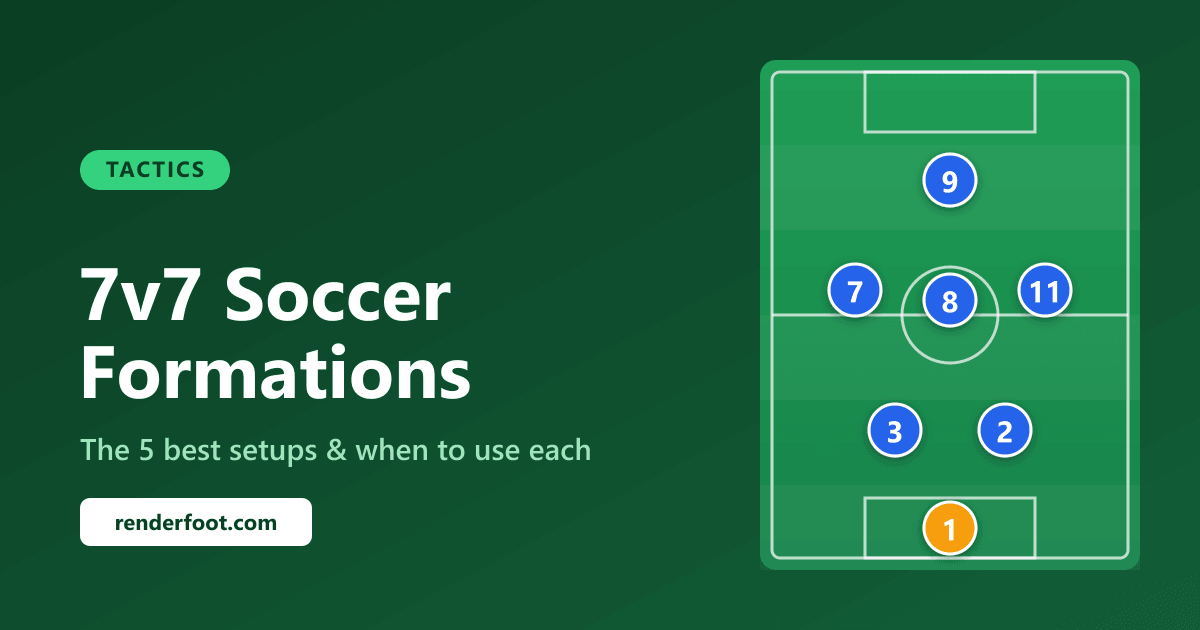
The most balanced and widely used 7v7 soccer formation is the 2-3-1 — two defenders, three midfielders, and one striker (the goalkeeper is never counted). It gives you natural width, easy passing triangles, and a clear role for every player, which is why most coaches treat it as the default starting point.
But the "best" 7v7 formation depends on your team: whether you want to attack, defend a lead, or dominate the midfield. Below are the five most effective 7v7 formations, each with a diagram, its strengths and weaknesses, and exactly when to use it. You can recreate any of them in seconds with our 7v7 Lineup Builder.
How to read a 7v7 formation
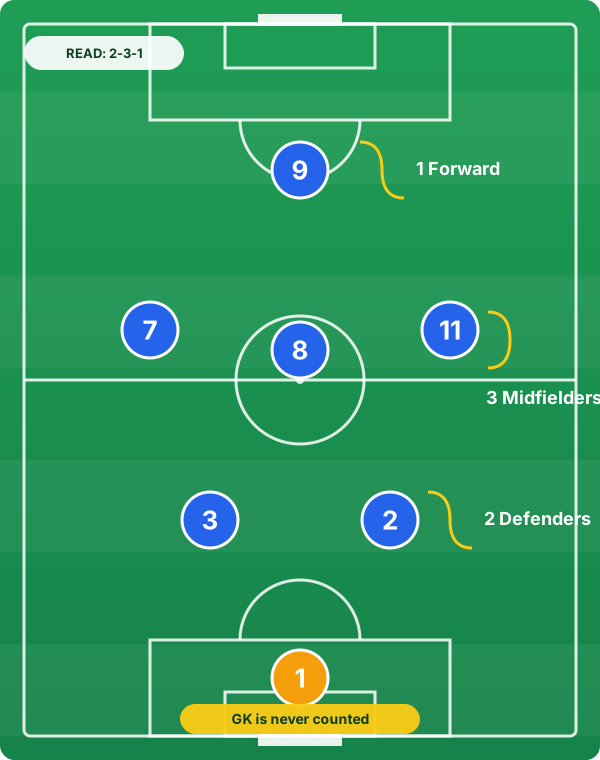
Formation numbers are always read from defense to attack. A "2-3-1" means:
- 2 defenders
- 3 midfielders
- 1 forward
The goalkeeper is assumed and never included — so the numbers in a 7v7 formation always add up to six outfield players. Once you know that, every formation below is easy to picture.
7v7 soccer positions
A 7v7 team has seven positions: a goalkeeper and six outfield players, usually split into defenders, midfielders and one or two forwards. The exact positions depend on the formation. In the most common setup, the 2-3-1, they are goalkeeper, left back, right back, left midfielder, central midfielder, right midfielder and striker.
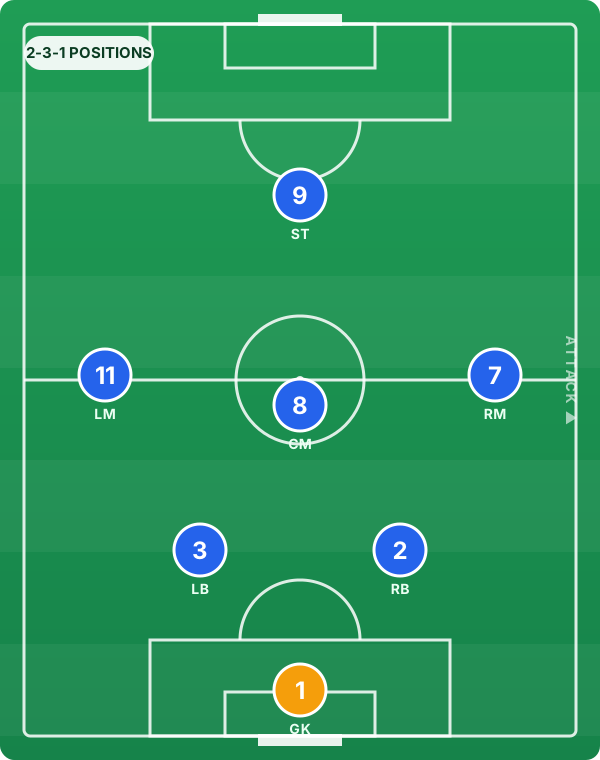
| Number | Position | Abbreviation | Main job in 7v7 |
|---|---|---|---|
| 1 | Goalkeeper | GK | Stops shots and starts attacks; at 7v7 the keeper must play out, not punt |
| 2 | Right back / right defender | RB | Covers the right side of defense, splits wide to receive from the keeper |
| 3 | Left back / left defender | LB | Covers the left side of defense, splits wide to receive from the keeper |
| 8 | Central midfielder | CM | Links defense and attack, the team's main passer |
| 7 | Right midfielder | RM | Gives width on the right, attacks and tracks back |
| 11 | Left midfielder | LM | Gives width on the left, attacks and tracks back |
| 9 | Striker / forward | ST | Leads the line, presses defenders and finishes chances |
With only two defenders, the backs in a 2-3-1 play a mix of center-back and full-back: they defend the middle, then split toward the touchlines when your team has the ball.
Switch to a back three and the positions change. In a 3-2-1 the outfield positions are left back, center back, right back, a defensive midfielder (6), a central midfielder (8) and a striker:
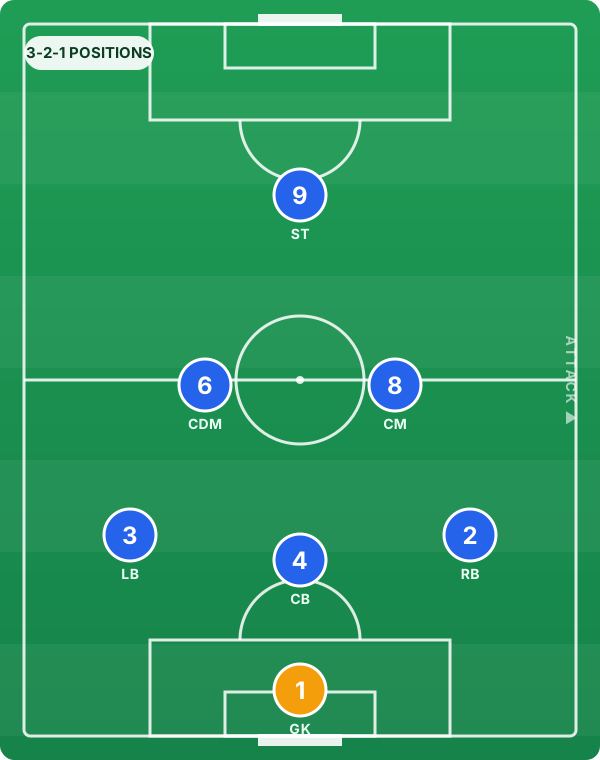
The numbers follow the standard 11v11 system (1 goalkeeper, 2 and 3 full-backs, 4 center-back, 6 holding midfielder, 8 central midfielder, 7 and 11 wide players, 9 striker), so players keep the same number as they move up to 9v9 and 11v11. Our soccer positions and numbers guide explains the full system, and you can drag any of these setups into place in the 7v7 Lineup Builder.
1. The 2-3-1 — balanced and beginner-friendly
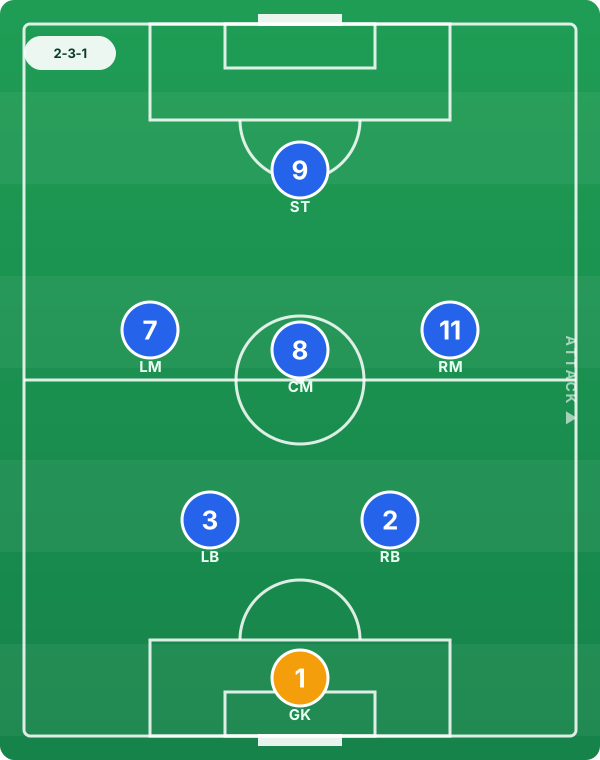
The 2-3-1 is the industry standard for 7v7 and the formation most youth coaches start with. The three midfielders form a natural line across the pitch, creating passing triangles and teaching players the concept of width.
- Strengths: Excellent balance between attack and defense. The three midfielders can outnumber and overwhelm the opponent's center.
- Weaknesses: The lone striker can get isolated if the midfield doesn't push up, and the two defenders can be exposed on fast counter-attacks.
- Best for: Developing teams, possession-based play, and coaches teaching positional roles.
How the 2-3-1 moves: with the ball, the defenders split and the wide midfielders push high and wide to stretch the pitch. Without it, the whole team drops into a compact block: the wide midfielders tuck in beside the central midfielder and the striker drops to the halfway line to screen passes.
Build the 2-3-1 in the 7v7 Lineup Builder →
2. The 3-2-1 — defensive solidity
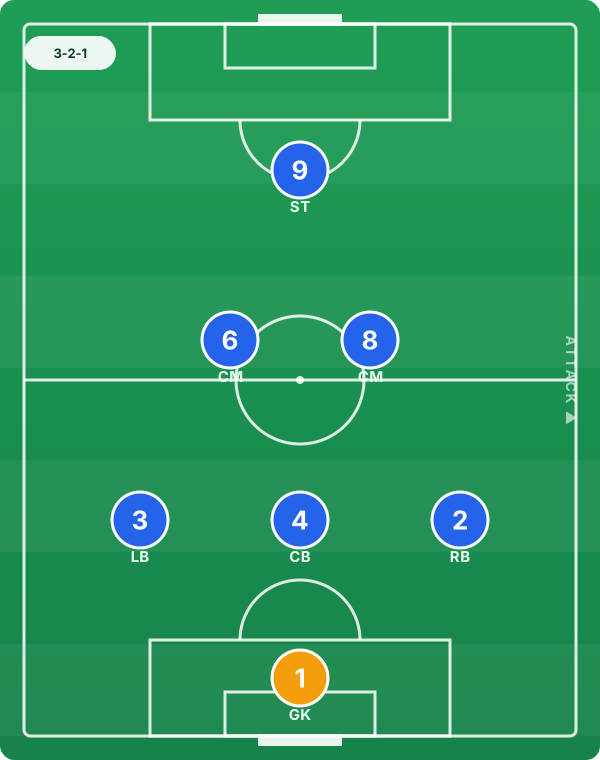
Adding a third defender creates a strong spine through the middle of the field. The 3-2-1 (sometimes called the "Christmas tree") is compact and very hard to break down centrally.
- Strengths: Highly compact and difficult to penetrate through the middle. Great at smothering counter-attacks.
- Weaknesses: Lacks natural width. The outside center-backs must step forward to support attacks, or the team becomes too passive.
- Best for: Protecting a lead, facing a stronger attacking opponent, or when you have a quality holding midfielder.
Build the 3-2-1 in the 7v7 Lineup Builder →
3. The 3-1-2 — direct and attacking
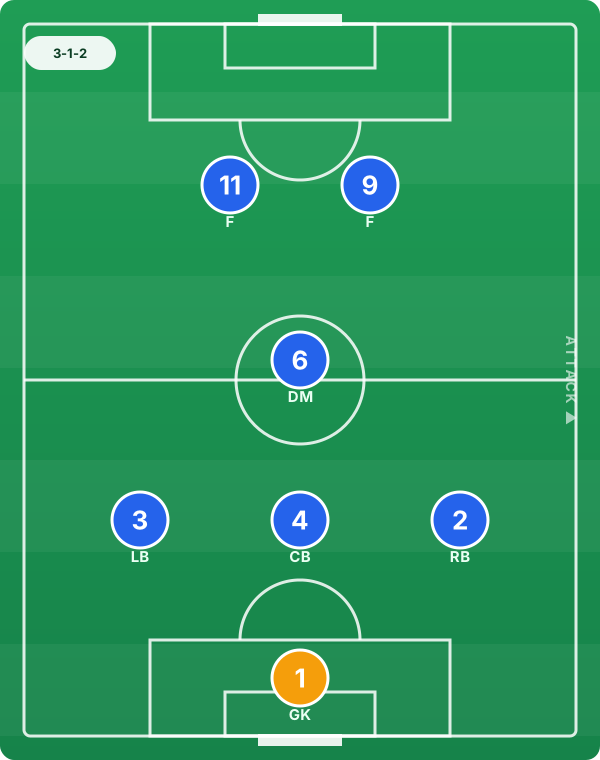
The 3-1-2 keeps three at the back but pushes two forwards high up the pitch, with a single holding midfielder linking the two. It's built to pressure the opponent's back line.
- Strengths: Defensively secure with three defenders while constantly threatening with two strikers. Strong for counter-attacking.
- Weaknesses: Puts a heavy workload on the defenders to provide width. The single midfielder can be overrun if the opponent dominates the center.
- Best for: Counter-attacking teams, and squads blessed with two fast or clinical forwards.
Build the 3-1-2 in the 7v7 Lineup Builder →
4. The 2-2-2 — flexible box
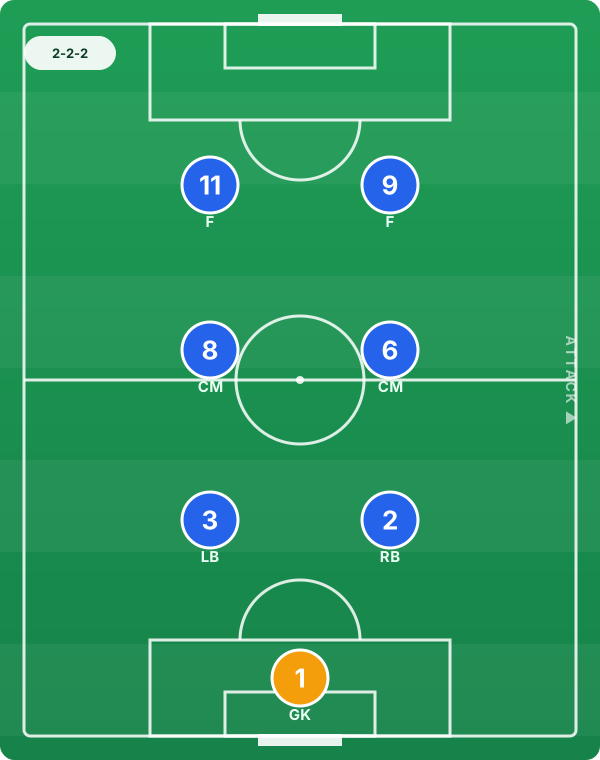
The 2-2-2 splits the team into three even pairs — two defenders, two midfielders, two forwards — in a box shape. Every player knows exactly who their partner is, which makes it simple to coach.
- Strengths: Constant, aggressive pressure. The midfield pair acts as an "engine room," shifting quickly between defense and attack.
- Weaknesses: Demands high fitness. Gaps can open on the wings if the midfield pair gets pulled out of shape.
- Best for: Energetic teams that want to press high and play a fast, direct style.
Build the 2-2-2 in the 7v7 Lineup Builder →
5. The 1-3-2 — fearless high press
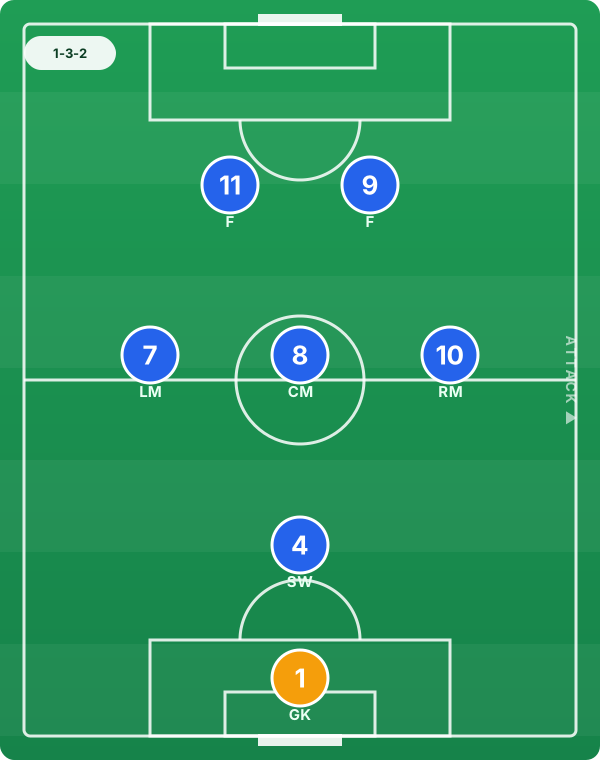
The most aggressive option on this list. The 1-3-2 drops to a single sweeping defender so you can flood the midfield and attack with two forwards. It's high-risk, high-reward.
- Strengths: Overwhelms the opponent's half. Two forwards force the opposing defense to sit deep.
- Weaknesses: Very exposed at the back. The lone defender must be quick, and the goalkeeper often has to act as a sweeper-keeper behind them.
- Best for: Advanced, confident teams that can press high and are chasing a goal.
Build the 1-3-2 in the 7v7 Lineup Builder →
How to choose the right 7v7 formation
There is no single "best" formation — only the best one for your players and the game in front of you. A quick guide:
- Want balance and development? Start with the 2-3-1.
- Protecting a lead or facing a strong attack? Switch to the 3-2-1.
- Have two fast strikers? Try the 3-1-2.
- Fit, high-energy team? The 2-2-2 suits relentless pressing.
- Chasing a goal late? Gamble on the 1-3-2.
The smartest coaches change shape during a match. The easiest way to plan those switches is to map them out first — drag your players into each setup with the 7v7 Lineup Builder and share the lineup with your team.
How your formation changes at the build-out line
At U9 and U10, 7v7 uses a build-out line 14 yards in front of each goal. When your goalkeeper has the ball in their hands or takes a goal kick, the opponents must retreat behind that line, and the keeper may not punt. That rule changes how every formation should look in possession:
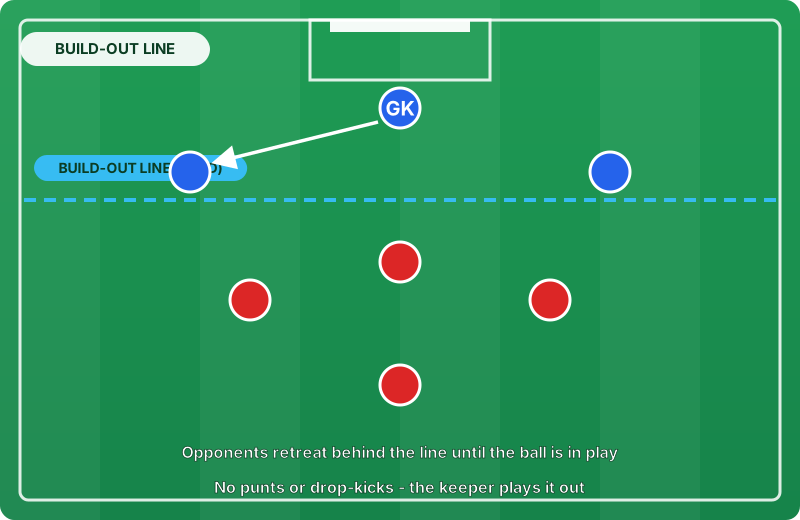
- Defenders split wide, close to the edges of the penalty area, so the keeper always has a short pass.
- The central midfielder drops into the space between them to offer a third option.
- Wide midfielders stay high and wide, so one pass breaks the opponent's press.
A back three (3-2-1 or 3-1-2) makes building out easier, because there's always a defender in the middle. A 2-3-1 needs the central midfielder to drop. For a full session built around this, see our U10 soccer practice plan.
When do kids play 7v7?
Under U.S. Soccer's small-sided standards, players move through the formats by age:
| Age group | Format |
|---|---|
| U6 – U8 | 4v4 (no goalkeepers) |
| U9 – U10 | 7v7 |
| U11 – U12 | 9v9 |
| U13 and up | 11v11 |
So 7v7 is a two-season stage. Choose formations that prepare players for 9v9: a 2-3-1 grows naturally into a 3-2-3 or 3-3-2. Our small-sided formations guide covers 9v9 and smaller formats, and the U12 practice plan picks up where 7v7 leaves off.
Where to put your weakest players in 7v7
A common question from youth coaches. In a 7v7 setup, the positions with the least defensive responsibility are usually the wide midfield roles in a 2-3-1, where a less experienced player can stay forward and focus on simple tasks without being isolated at the back. Avoid hiding a weaker player at center-back or as a lone striker, where one mistake is most costly. Rotating positions across a season, rather than fixing roles, develops every player faster.
Official 7v7 rules and field setup
7v7 isn't just a casual format — in the United States it's the official standard for U9 and U10 players under U.S. Soccer's Player Development Initiatives. Key specifications:
- Field size: 55–65 yards long by 35–45 yards wide
- Ball: size 4
- Goal: 6.5 ft high by 18.5 ft wide
- Match length: two 25-minute halves
- Build-out line: a line 14 yards from each goal (U9+) that encourages playing the ball out from the back
- Offside: only called between the build-out line and the goal — there is no offside before U9
Sources: U.S. Soccer Player Development Initiatives and the US Youth Soccer modified laws for 7v7.
Frequently asked questions
What is the best formation for 7v7?
The 2-3-1 is the most popular and balanced 7v7 formation, suitable for almost any team. For a more defensive setup choose the 3-2-1; for a more attacking one, the 3-1-2.
What positions are in 7v7 soccer?
A 7v7 team has a goalkeeper plus six outfield players, usually split into defenders, midfielders, and forwards depending on the formation. In a 2-3-1 that's two defenders, three midfielders, and one striker.
How many players are on a 7v7 soccer team?
Seven players are on the field per team, including the goalkeeper. Squads carry extra players for substitutions, but only seven play at once.
What are the positions called in 7v7 soccer?
In a 2-3-1 they are goalkeeper (GK), left back (LB), right back (RB), left midfielder (LM), central midfielder (CM), right midfielder (RM) and striker (ST). In a 3-2-1 the back line becomes left back, center back and right back, with a defensive midfielder and central midfielder in front.
What numbers do 7v7 positions wear?
Most coaches use the standard 11v11 numbering: 1 for the goalkeeper, 2 and 3 for the right and left backs, 4 for a center back, 6 and 8 for central midfielders, 7 and 11 for the wide midfielders, and 9 for the striker.
What is the best 7v7 formation for U9 and U10?
The 2-3-1 is the best starting formation for U9 and U10. It gives every player a clear role, teaches width, and works well with the build-out line. Move to a 3-2-1 if your team concedes too many counter-attacks.
Where should you put weak players in 7v7?
The wide midfield positions in a 2-3-1 carry the least risk, letting a developing player contribute without being isolated. Avoid placing weaker players at center-back or as the lone striker.
Build your 7v7 lineup
The fastest way to learn these formations is to build them yourself. Open the free 7v7 Lineup Builder, drag your players into any shape above, and export a clean graphic to share with your team or parents — no design skills needed.