Soccer has a reputation for being simple — get the ball in the net more than the other team — and at its heart it is. But a handful of rules (offside and handball especially) trip up new fans and players. This guide explains the rules of soccer in plain English, based on the official IFAB Laws of the Game.
The object of the game
Two teams of 11 players each try to score by putting the ball into the opponent's goal. The team with the most goals when time runs out wins. Only the goalkeeper may use their hands, and only inside their own penalty area. Everyone else uses their feet, head, or body — never the hands or arms.
The field and players
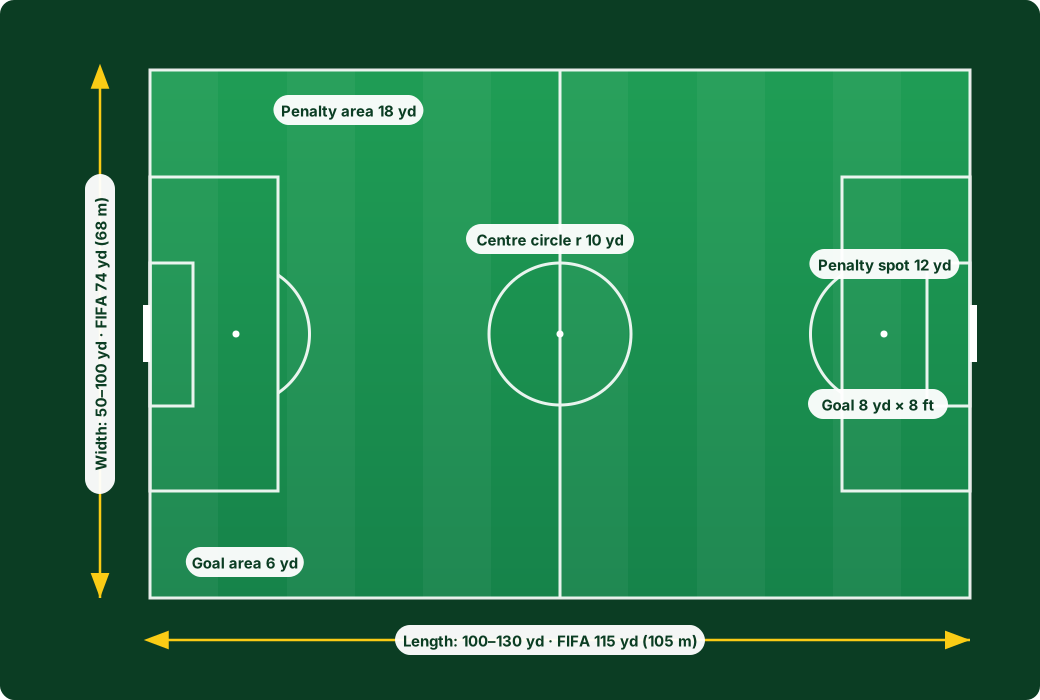
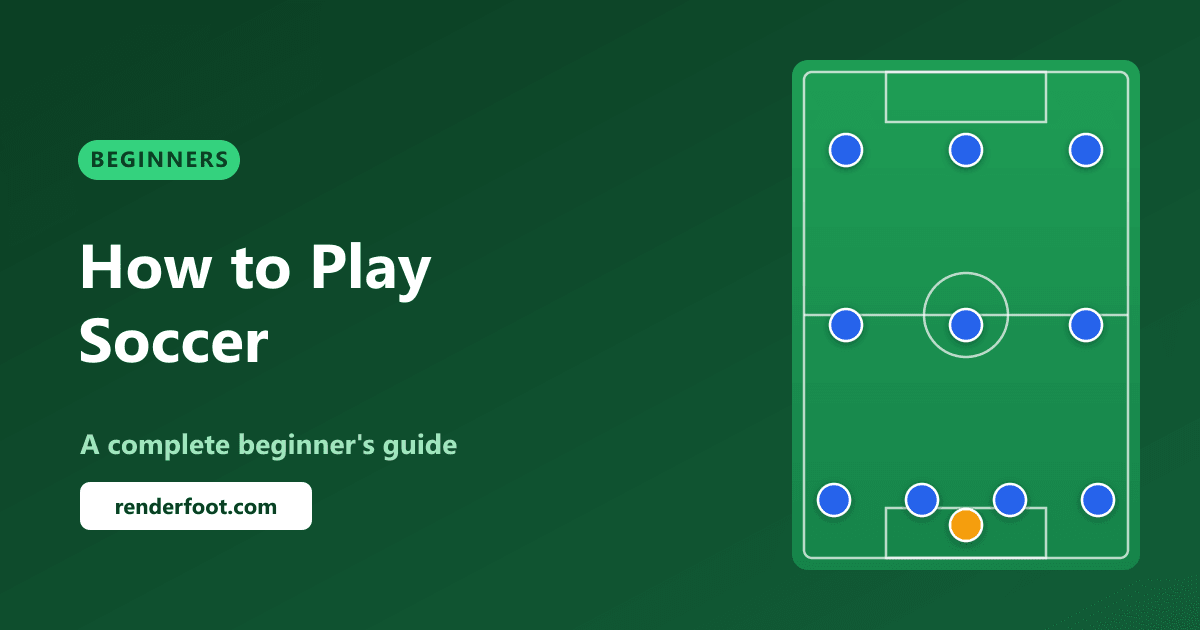
- Players: 11 per side, including one goalkeeper. A team needs at least 7 to continue a match.
- The field: a rectangle with a halfway line, centre circle, two penalty areas (the "18-yard box") and goal areas (the "six-yard box"). See our full soccer field dimensions guide for exact measurements.
- Equipment: a ball, shirts (each team a different colour), shorts, socks, shin guards and footwear. Goalkeepers wear a distinct colour.
Match duration
A standard match is two 45-minute halves (90 minutes total) with a 15-minute half-time. The referee adds "stoppage time" at the end of each half for time lost to substitutions, injuries and delays. Youth and small-sided games use shorter halves.
Starting and restarting play
- Kick-off starts each half and restarts play after a goal, from the centre spot.
- Ball in and out of play: the ball is out when it fully crosses a boundary line. It's restarted by a throw-in (off the sideline), corner kick or goal kick (off the goal line).
- Throw-in: taken with both hands, from behind and over the head, both feet on the ground. (See our note on the throw-in rules below.)
Scoring
A goal is scored when the whole ball crosses the whole goal line between the posts and under the crossbar, with no foul committed. The ball completely crossing the line is the key — a ball on the line is not yet a goal.
Offside — the rule everyone asks about
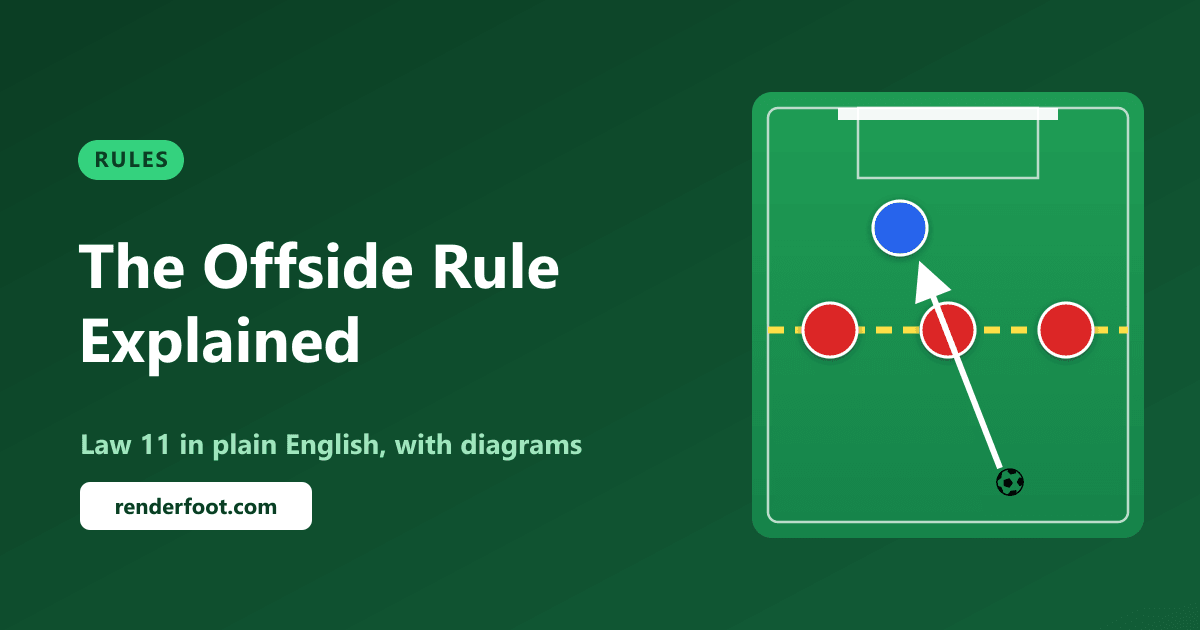
A player is in an offside position if they are nearer the opponent's goal line than both the ball and the second-to-last defender (usually the last outfield defender) at the moment a teammate plays the ball — but only in the opponent's half.
Being in an offside position isn't an offence by itself. A player is only penalised if they're involved in active play — receiving the ball, interfering with an opponent, or gaining an advantage. Key points:
- You cannot be offside direct from a throw-in, corner, or goal kick.
- You cannot be offside in your own half.
- It's judged at the moment the ball is played, not when it's received.
Offside has more corner cases than any other law — deliberate saves, rebounds, and being exactly level with the last defender. Our complete offside rule guide works through all of them with diagrams.
Try it: the offside simulator
Offside is far easier to understand when you can see it. Drag the attacker and the defensive line below (or use the sliders) and watch the verdict update in real time — notice that being level with the last defender is onside.
Fouls and free kicks
A foul is an unfair challenge — kicking, tripping, pushing, holding, or charging an opponent carelessly. Fouls are punished with a free kick to the other team:
- Direct free kick: you can score straight from it (e.g. for a trip or push).
- Indirect free kick: another player must touch the ball before a goal counts (e.g. for offside or obstruction).
- A foul by the defending team inside their own penalty area results in a penalty kick.
Handball
A handball offence is when a player deliberately touches the ball with their hand or arm, or makes their body "unnaturally bigger" with the arm. Accidental contact is usually not an offence — but a goal scored off the hand/arm (even accidentally) is disallowed. Handball is one of the most debated calls in the game; the deliberate-vs-accidental judgment is up to the referee.
Throw-in, corner and goal kick
- Throw-in: awarded when the ball crosses the sideline, to the team that didn't touch it last. Use both hands, over the head, both feet on the ground — or it's a foul throw.
- Corner kick: awarded when the defending team puts the ball over their own goal line. Taken from the corner arc; you can score directly.
- Goal kick: awarded when the attacking team puts the ball over the goal line. Taken from inside the goal area.
Penalty kicks
A penalty is a free shot from the penalty spot (12 yards out) with only the goalkeeper to beat. It's awarded for a foul by the defending team inside their own penalty area. The keeper must stay on the line until the ball is kicked.
Cards: yellow and red
The referee uses cards to discipline players:
- Yellow card: a caution for a serious foul, persistent fouling, dissent, or time-wasting.
- Red card: a sending-off — for a second yellow, violent conduct, denying a clear goal-scoring opportunity, or serious foul play. A sent-off player leaves and cannot be replaced, so the team plays a player short.
Substitutions and VAR
- Substitutions: most competitions allow up to 5 substitutions (from a bench of up to 9). A substituted player cannot return.
- VAR (Video Assistant Referee): used in top competitions to review four match-changing decisions — goals, penalties, straight red cards, and mistaken identity.
Frequently asked questions
What are the basic rules of soccer?
Two teams of 11 try to score by getting the ball fully over the goal line into the net, using any body part except the hands and arms (only the goalkeeper may handle the ball, inside their own area). Matches are two 45-minute halves; the team with more goals wins. Fouls give the other team a free kick, and offside, handball and serious fouls are the main offences.
How does the offside rule work in soccer?
A player is offside if, when a teammate plays the ball, they are closer to the opponent's goal than both the ball and the second-to-last defender — and then become involved in the play. You can't be offside in your own half, or directly from a throw-in, corner or goal kick. It's judged at the moment the ball is played.
What is handball in soccer?
Handball is deliberately touching the ball with the hand or arm, or making the body unnaturally bigger with the arm. Accidental contact usually isn't penalised, but any goal scored off the hand or arm is disallowed even if accidental. The referee decides whether the contact was deliberate.
How long is a soccer game?
A standard soccer match is 90 minutes — two 45-minute halves with a 15-minute half-time — plus stoppage time added by the referee. Knockout games tied after 90 minutes may go to two 15-minute periods of extra time and then a penalty shootout.
How many players are on a soccer team?
Eleven players per team are on the field, including the goalkeeper. Teams also have substitutes on the bench (most competitions allow up to five substitutions). Small-sided youth formats use fewer players — see our small-sided formations guide.
Put the rules into practice
Now that you know the rules, learn the positions and numbers, explore football formations, or map out tactics on the free RenderFoot tactical board.