There is no single best football formation — the right one depends on your players, your opponent, and whether you want to attack or defend. But five formations cover almost every situation you'll ever face: the 4-4-2, 4-3-3, 4-2-3-1, 3-5-2 and 4-1-4-1. Learn these and you'll understand 90% of the tactics you see in the professional game.
This guide explains each one with a clear diagram, its strengths and weaknesses, the famous teams that mastered it, and exactly when to use it.
What is a football formation?
A formation describes how the 10 outfield players are arranged on the pitch. It's written as a series of numbers read from defence to attack — for example, 4-3-3 means 4 defenders, 3 midfielders, and 3 forwards. The goalkeeper is always assumed and never included, so the numbers add up to 10.
Formations aren't rigid. Players move fluidly during a match, but the formation sets the starting structure and defines each player's primary zone of responsibility. Think of it as the skeleton your tactics hang on.
The 5 best formations explained
1. The 4-4-2 — the classic
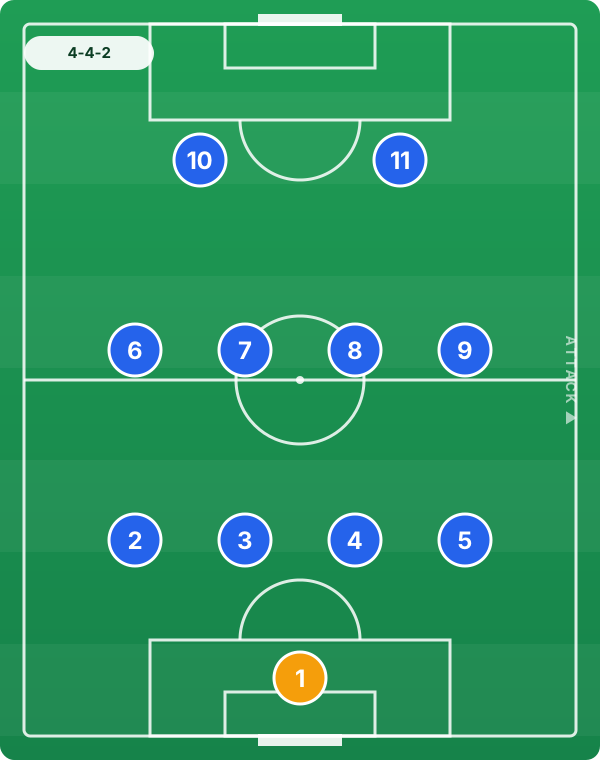
The 4-4-2 is football's most iconic shape and the easiest to understand. Two banks of four create a solid defensive block, while two strikers give a constant attacking threat and someone to share the workload up front.
- Strengths: Simple, balanced, and easy to keep shape out of possession. Clear roles make it perfect for learning.
- Weaknesses: The two central midfielders can be outnumbered against a three-man midfield, leaving the team overrun in the centre — the main reason elite teams drifted away from it.
- Best for: Beginners, organised defensive teams, and counter-attacking sides with two quick strikers.
- Famous teams: Manchester United's 1999 Treble side, Atlético Madrid under Diego Simeone.
2. The 4-3-3 — the modern standard
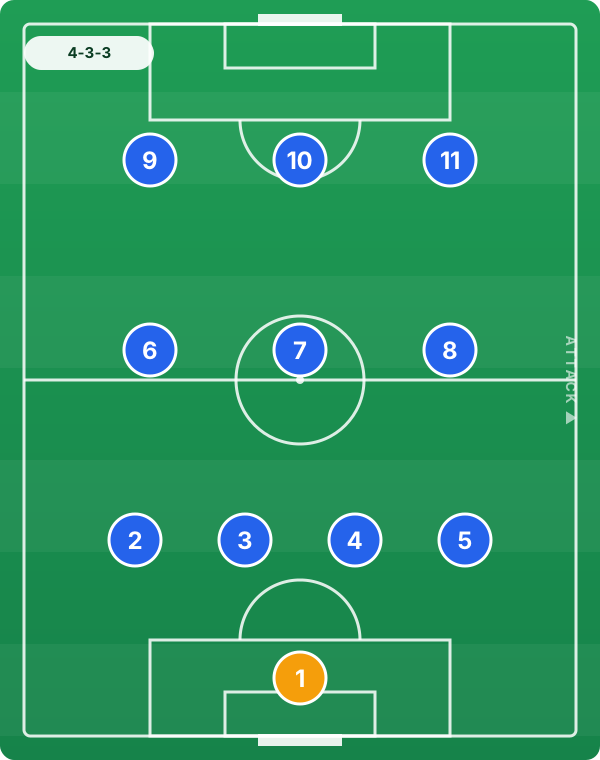
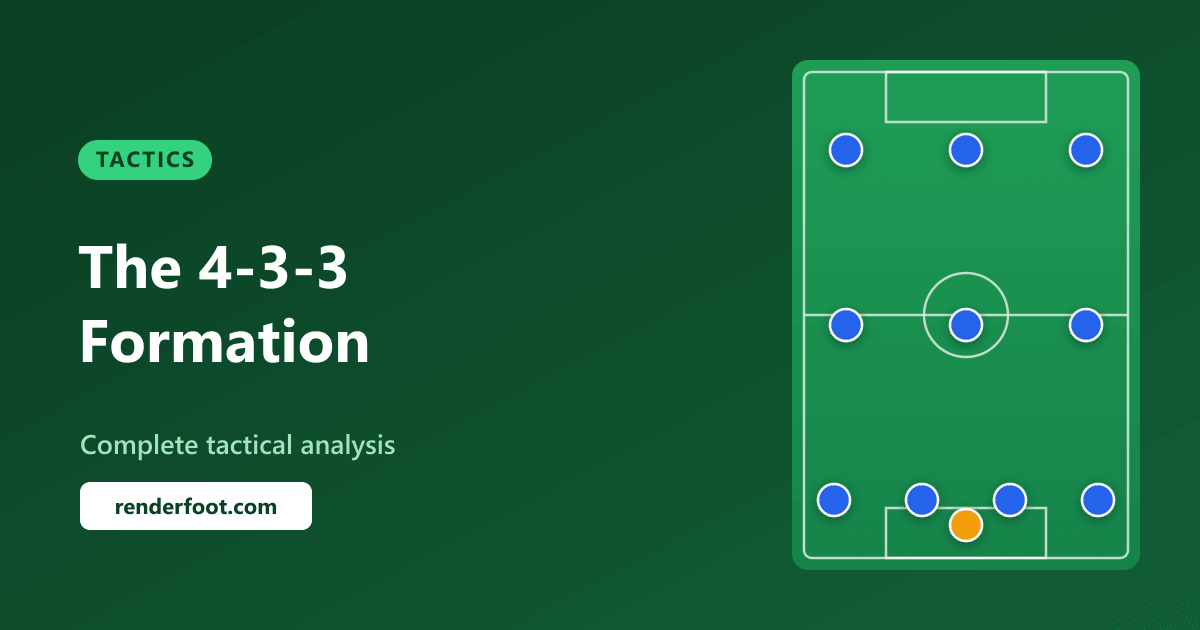
Barcelona's tiki-taka era made the 4-3-3 the default formation of modern football. Three central midfielders give numerical superiority in the middle, while two wingers and overlapping full-backs provide width and create 1v1s.
- Strengths: Natural passing triangles for ball retention, a strong midfield three, and width from the wingers. Excellent for high pressing.
- Weaknesses: The spaces behind advancing full-backs are exposed on the counter, and the lone striker can be isolated.
- Best for: Possession-based, high-pressing teams with technical midfielders.
- Famous teams: Pep Guardiola's Barcelona, Jürgen Klopp's Liverpool.
Want the full breakdown? See our deep dive on understanding the 4-3-3 formation — pressing triggers, full-back roles, and how to beat it.
3. The 4-2-3-1 — the flexible all-rounder
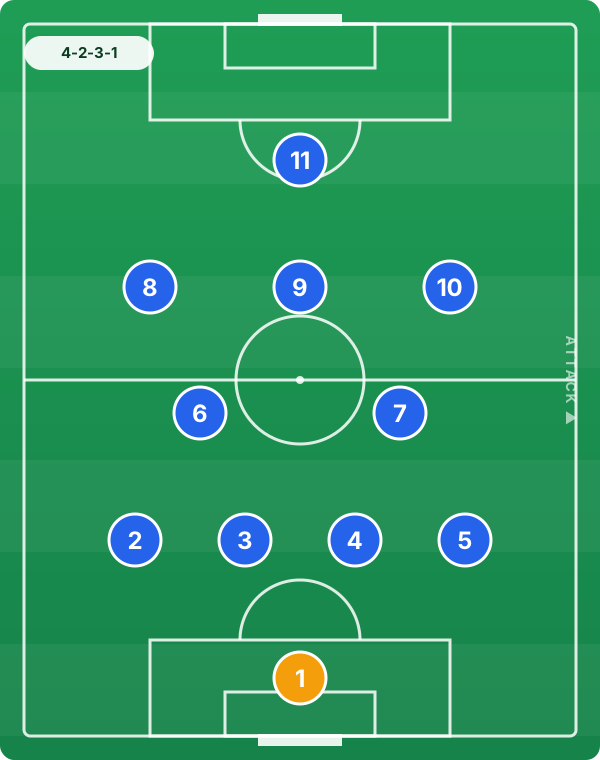
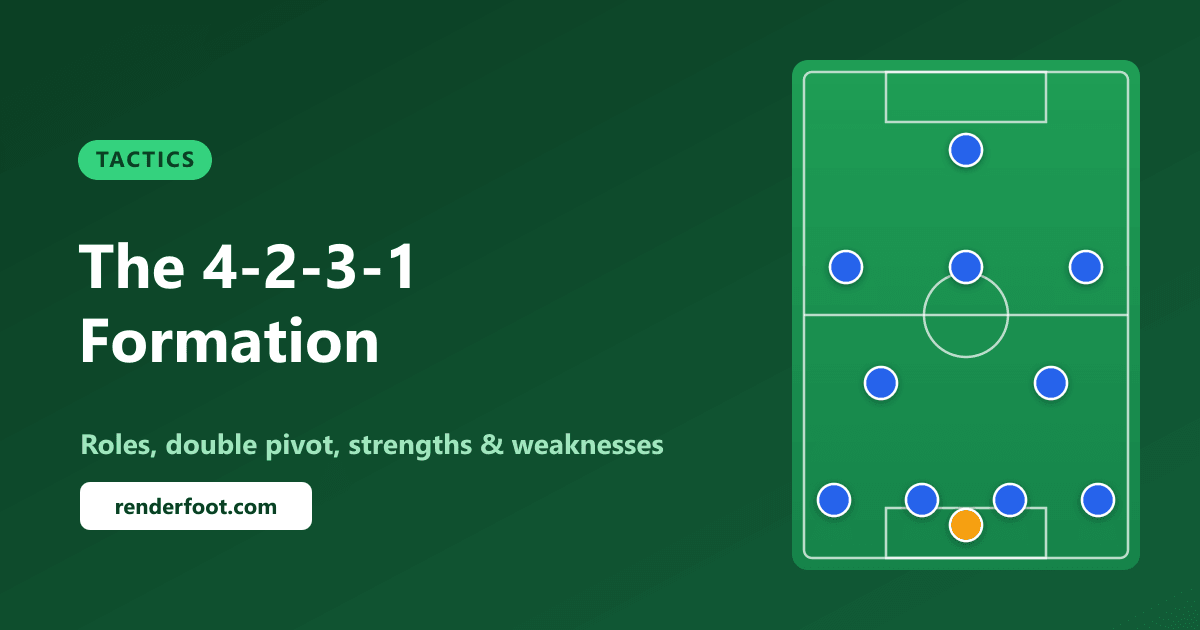
Germany won the 2014 World Cup with the 4-2-3-1, and it's arguably the most popular formation in the modern game. A double pivot of two holding midfielders shields the defence, while a number 10 and two wingers support a lone striker.
- Strengths: Defensive solidity from the double pivot, midfield control (five midfielders), and easy transition into a 4-4-2 or 4-4-1-1 when defending.
- Weaknesses: The lone striker can be isolated, and both flanks are exposed if the full-backs push high at the same time.
- Best for: Balanced teams that want defensive security without sacrificing creativity.
- Famous teams: Germany (2014 World Cup), Real Madrid under José Mourinho.
Read more: our complete 4-2-3-1 formation guide covers every role, the double pivot, and how it compares to the 4-3-3.
4. The 3-5-2 — the wing-back system
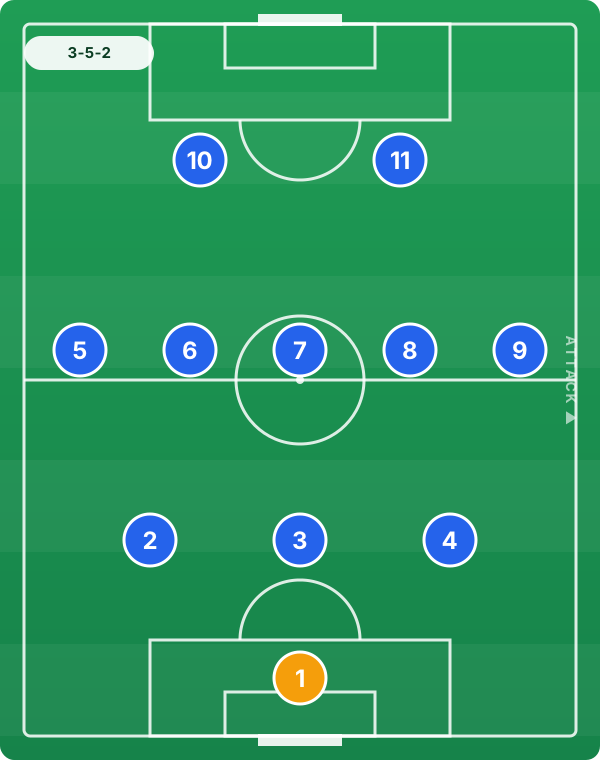
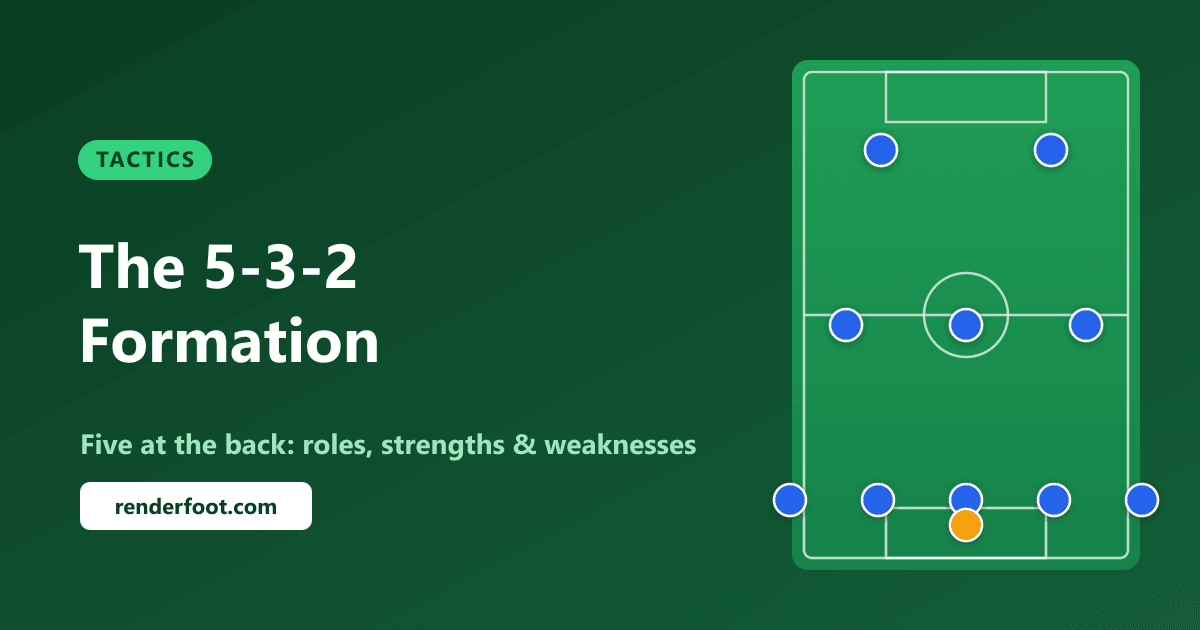
If you have athletic wing-backs, the 3-5-2 dominates the midfield with five central and wide players. Three centre-backs provide cover when the wing-backs bomb forward, and two strikers keep a constant goal threat.
- Strengths: Midfield overload, width from wing-backs, and a settled back three that's hard to break down centrally.
- Weaknesses: Demands extremely fit wing-backs. If they're pinned back, it becomes a passive 5-3-2; if they're bypassed, the flanks open up.
- Best for: Teams with two energetic wing-backs and a strong defensive spine.
- Famous teams: Antonio Conte's Juventus and Inter Milan.
5. The 4-1-4-1 — the solid shield
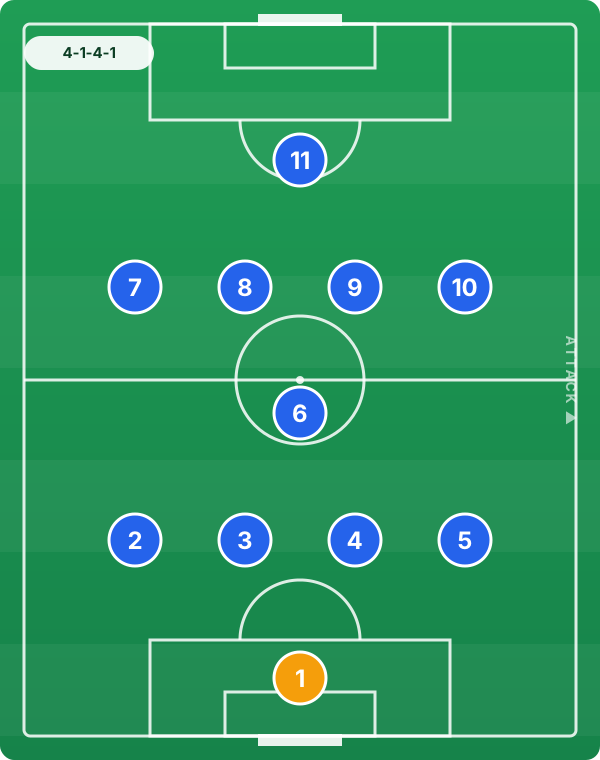
The 4-1-4-1 places a single holding midfielder as a shield in front of the defence, with a bank of four ahead providing width and creativity. It creates a compact, disciplined block and morphs into a 4-3-3 when the team attacks.
- Strengths: Very solid defensive structure with one clear anchor; flexible enough to become a 4-3-3 going forward.
- Weaknesses: Heavily dependent on that single pivot — if he's bypassed or unavailable, the back four is exposed.
- Best for: Teams that want to defend deep, stay compact, and break quickly.
- Famous teams: France's 2018 World Cup-winning side, various Chelsea sides.
How to choose the right formation
There is no perfect formation — only the best one for your players and the game in front of you. Ask three questions:
- What are your players' strengths? Fast wingers suit a 4-3-3; two clinical strikers suit a 4-4-2; athletic wing-backs unlock a 3-5-2.
- Who are you facing? Use a more compact shape (4-1-4-1, 4-4-2) against stronger sides; a more attacking one (4-3-3, 3-5-2) against weaker ones.
- What's your style? Possession suits the 4-3-3 and 4-2-3-1; counter-attacking suits the 4-4-2 and 4-1-4-1.
The smartest coaches change shape during a match. The easiest way to plan those switches is to map them out first — drag your players into any formation above with the free RenderFoot lineup builder, then export a clean graphic to share with your team.
Playing small-sided football?
Five-, seven- and nine-a-side games use their own shapes, not shrunken 11-a-side ones. See our guide to the best formations for small-sided football (5v5 to 9v9), the 7v7 formations guide, and soccer positions and numbers explained to learn what each shirt number does.
Frequently asked questions
What is the best football formation?
There is no single best formation — it depends on your players and the opponent. The 4-2-3-1 and 4-3-3 are the most popular in the modern game for their balance, the 4-4-2 is the easiest to learn, and the 3-5-2 is excellent if you have strong wing-backs.
What formation is better, 4-2-3-1 or 4-3-3?
Both are elite options. The 4-2-3-1 is more defensively secure thanks to its double pivot and a dedicated number 10, while the 4-3-3 offers better pressing and a more dynamic midfield three. Choose the 4-2-3-1 for control and the 4-3-3 for high-tempo, possession-based pressing.
Why is 4-4-2 not used as much anymore?
Top teams moved away from the 4-4-2 because its two central midfielders are easily outnumbered by three-man midfields (as in a 4-3-3 or 4-2-3-1), leading to a loss of control in the centre. It remains very effective for organised defensive and counter-attacking teams, however.
Which formation is the best in football history?
The 4-4-2 dominated the late 20th century, while the 4-3-3 and 4-2-3-1 have defined the modern era. The most successful all-time shape is debated, but the 4-3-3 popularised by Barcelona and Liverpool is often cited as the most influential.
What is the easiest formation for beginners?
The 4-4-2 is the easiest formation to learn because it splits the team into two clear banks of four with simple, well-defined roles, making it easy to keep shape when defending.
Visualise any formation with RenderFoot
The fastest way to learn these shapes is to build them yourself. Open the free RenderFoot lineup builder to drop players into any formation, customise team colours and numbers, and download your lineup as a PNG — no signup required. For position-by-position breakdowns, explore the full formations guide.