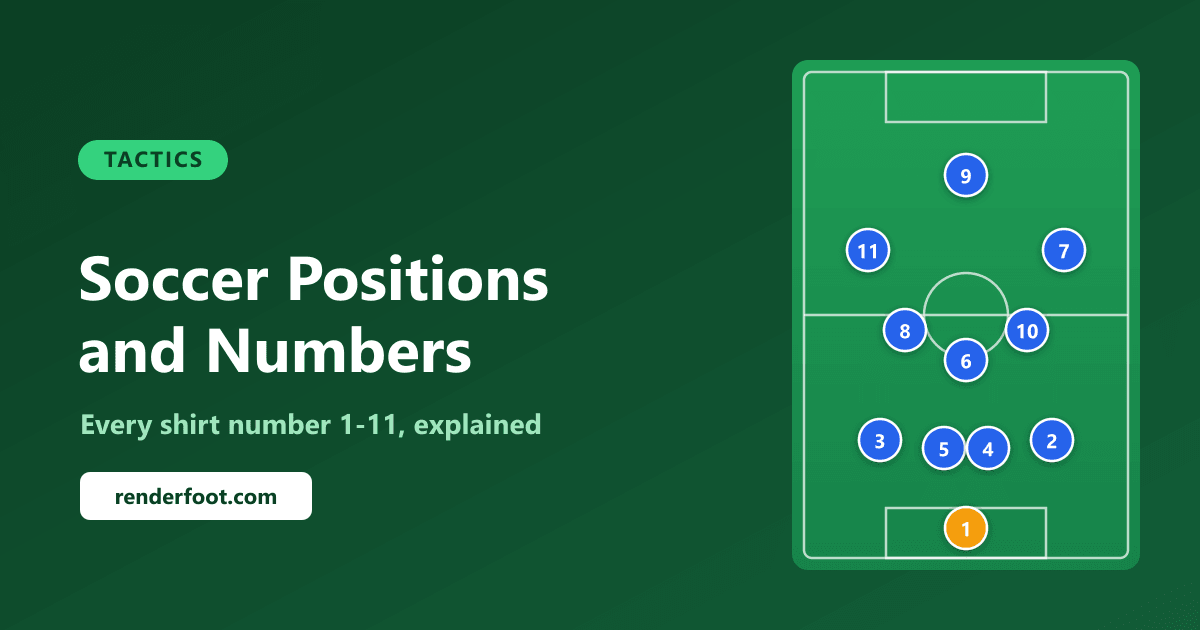
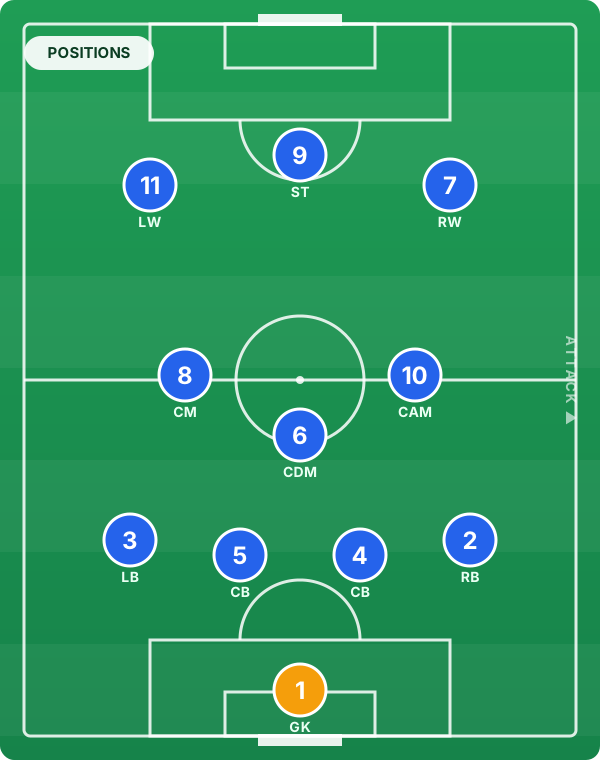
In soccer, each shirt number traditionally maps to a position on the pitch. The standard 1-11 numbering is:
- 1 – Goalkeeper (GK)
- 2 – Right-back (RB)
- 3 – Left-back (LB)
- 4 – Centre-back (CB)
- 5 – Centre-back (CB)
- 6 – Defensive midfielder (CDM)
- 7 – Right winger (RW)
- 8 – Central midfielder (CM)
- 9 – Striker (ST)
- 10 – Attacking midfielder (CAM)
- 11 – Left winger (LW)
These numbers come from the position a player starts in, not just the order they joined the squad. Once you know the system, coaches and fans can talk tactics in shorthand — "drop the 6," "find the 10," "overlap the 2." Here's what every number means, why the 7 and 10 are special, and how the numbers shift across the most common formations.
(A note on words: "soccer" and "football" are the same sport, and so are the position names below. American coverage says soccer, most of the world says football, and the numbering system is identical either way.)
Soccer positions by number: the full chart
| No. | Position | Abbr. | Unit | Main job |
|---|---|---|---|---|
| 1 | Goalkeeper | GK | Goal | Stop shots, command the box, start the build-up |
| 2 | Right-back | RB | Defence | Defend the right flank, overlap in attack |
| 3 | Left-back | LB | Defence | The mirror of the 2 on the left |
| 4 | Centre-back | CB | Defence | Central defender, often the ball-player |
| 5 | Centre-back | CB | Defence | The second centre-back; historically the stopper |
| 6 | Defensive midfielder | CDM | Midfield | Screen the back four, recycle possession |
| 7 | Right winger | RW | Attack | Beat the full-back, cross and score |
| 8 | Central midfielder | CM | Midfield | Box-to-box engine, links defence to attack |
| 9 | Striker | ST | Attack | Lead the line and finish chances |
| 10 | Attacking midfielder | CAM | Attack | Create between the lines |
| 11 | Left winger | LW | Attack | The 7's counterpart on the left |
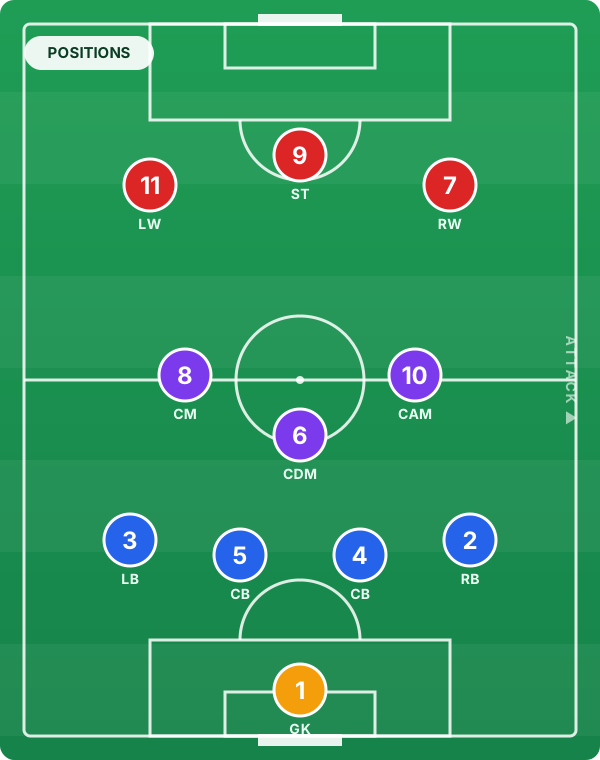
Colour-coded by unit, the same eleven look like this:
What number is each position? (abbreviation lookup)
The chart above runs number → position. This one runs the other way, for when you know the role and want the shirt:
| Abbr. | Position | Shirt number |
|---|---|---|
| GK | Goalkeeper | 1 |
| RB | Right-back | 2 |
| LB | Left-back | 3 |
| CB | Centre-back | 4 and 5 |
| RWB / LWB | Right / left wing-back | 2 and 3 (in a back three) |
| CDM | Defensive midfielder | 6 |
| CM | Central midfielder | 8 |
| CAM | Attacking midfielder | 10 |
| RW | Right winger | 7 |
| LW | Left winger | 11 |
| ST / CF | Striker / centre-forward | 9 |
Three of these get asked far more than the rest. A CDM wears 6, a left winger wears 11, and the two centre-backs wear 4 and 5 — with 4 usually the ball-playing one and 5 the more defensive of the pair. Wing-backs are the only entry that shifts: they keep the full-back numbers 2 and 3 even though they play like wingers.
The soccer numbering system explained
The goalkeeper (1)
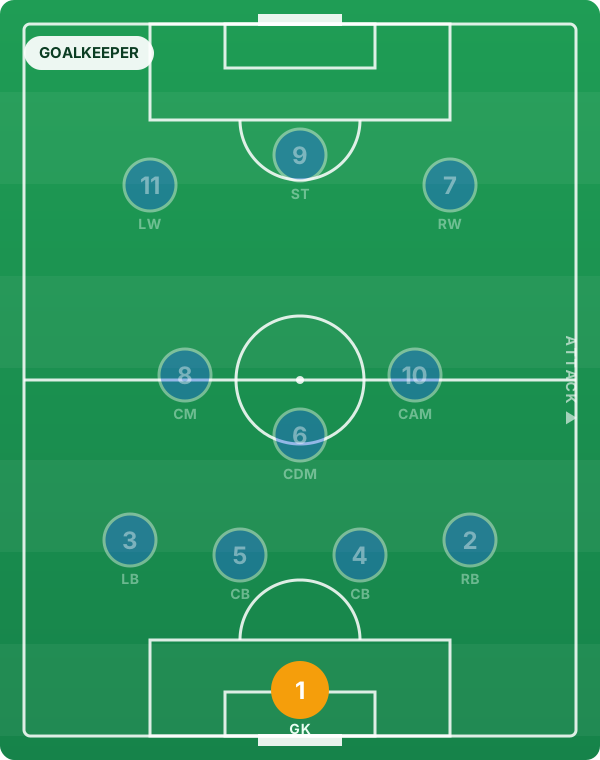
- 1 – Goalkeeper. The only number that is fixed across virtually every team and era. The last line of defense and the first line of attack in build-up. It is the one position with entirely different rules — the keeper may use their hands, but only inside their own penalty area.
Defenders (2-5)
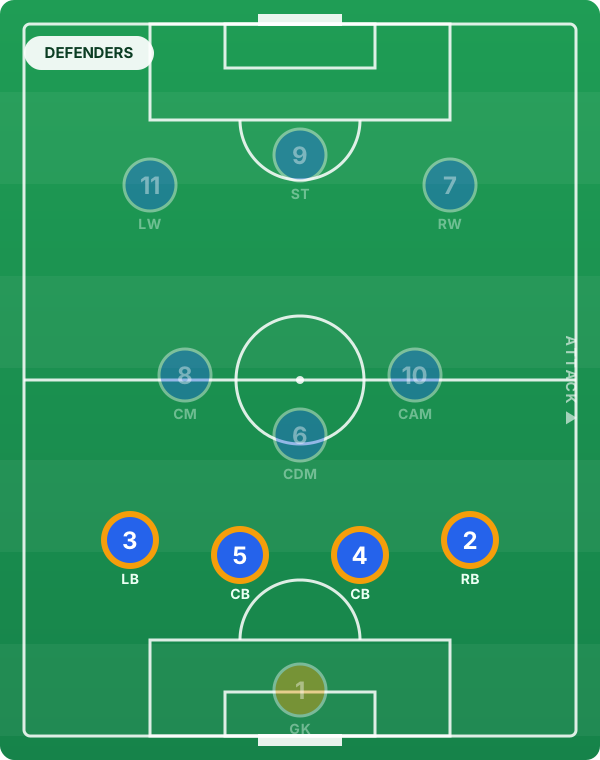
- 2 – Right-back. Defends the right flank and, in the modern game, overlaps to provide attacking width.
- 3 – Left-back. The mirror of the 2 on the left side.
- 4 – Centre-back. A central defender, often the more aggressive, ball-playing one.
- 5 – Centre-back (or sweeper). The second central defender; historically the "stopper" or libero.
Midfielders (6, 8, 10)
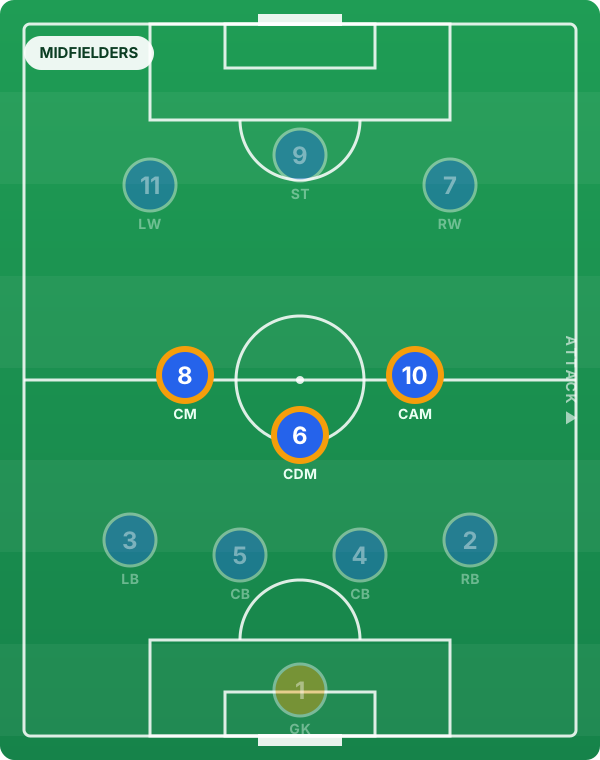
- 6 – Defensive midfielder. Sits in front of the back four, screens the defense, and starts attacks. The "pivot."
- 8 – Central midfielder. The box-to-box engine — defends, links play, and arrives late in the box.
- 10 – Attacking midfielder. The creative hub, playing between the opposition midfield and defense in the "hole."
Attackers (7, 9, 11)
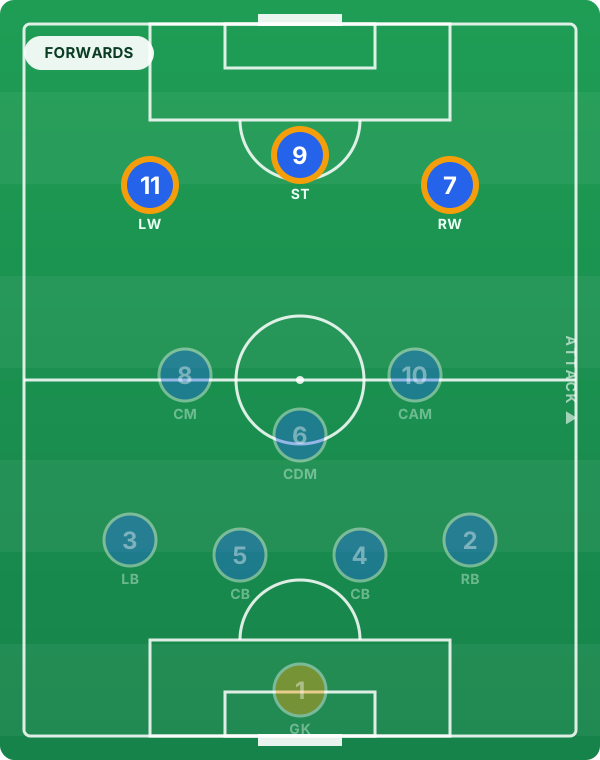
- 7 – Right winger. Pace, dribbling, and goals from the right. One of football's most glamorous shirts.
- 9 – Striker. The central goalscorer who leads the line.
- 11 – Left winger. The 7's counterpart on the left, often cutting inside onto their stronger foot.
What the numbers mean beyond the position
Four numbers have grown into shorthand for a type of player, not just a spot on the pitch.
The number 10 is the playmaker's shirt — the creative talisman who links midfield and attack. Think of the classic enganche or trequartista: technique, vision, and the freedom to roam. Pelé, Maradona, Zidane, and Messi all wore 10.
The number 7 is the icon's shirt — the flair winger or forward who beats players and scores spectacular goals. At clubs like Manchester United it became legendary through George Best, Cristiano Ronaldo, and Eric Cantona.
The number 9 means a centre-forward who plays on the shoulder and finishes — which is why pundits talk about a team "needing a proper 9," meaning a genuine penalty-box striker rather than a forward who drifts wide or drops deep.
The number 6 has become a job description of its own. "Playing a double 6" means fielding two holding midfielders; "we need a 6" means a screening midfielder in front of the defence.
Neither the 7 nor the 10 is better tactically, but both carry prestige, which is why star players often request them.
Modern variations on the classic numbers
The 1-11 map assumes a back four. Two common modern shapes bend it:
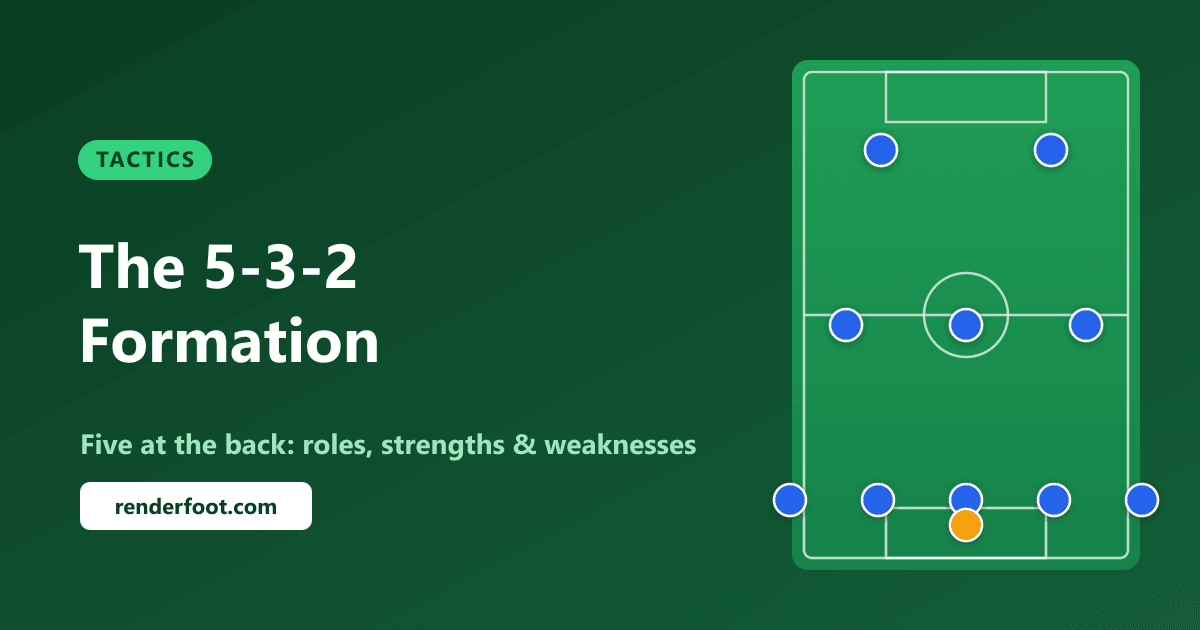
- Wing-backs (a back three). With three centre-backs, the 2 and 3 push much higher and become right and left wing-back (RWB, LWB) — defenders by number, wingers by workload. They cover the whole flank alone.
- The false 9. A striker wearing 9 who deliberately drops into midfield to drag centre-backs out of position, leaving space for the 7 and 11 to run into. The number stays; the job changes completely.
- The inverted winger. A left-footed 7 on the right (or a right-footed 11 on the left) who cuts inside to shoot rather than crossing from the byline. Now the default at the top level.
Position numbers by formation
The same numbers shift slightly depending on the system. Here's how they map onto the three most common formations.
4-4-2
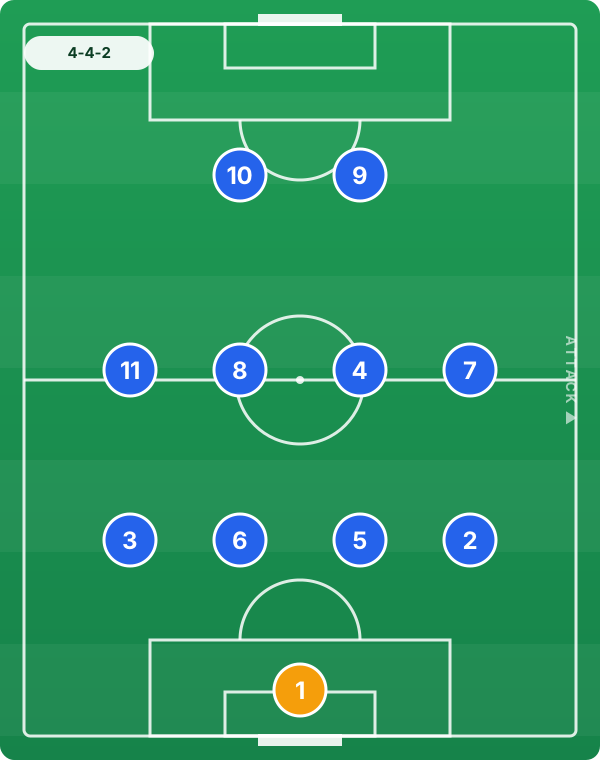
In the traditional English 4-4-2: 2 and 3 are the full-backs, 5 and 6 the centre-backs, 7 and 11 the wide midfielders, 4 and 8 the central midfielders, and 9 and 10 the strike partnership (the 10 dropping slightly deeper).
4-3-3
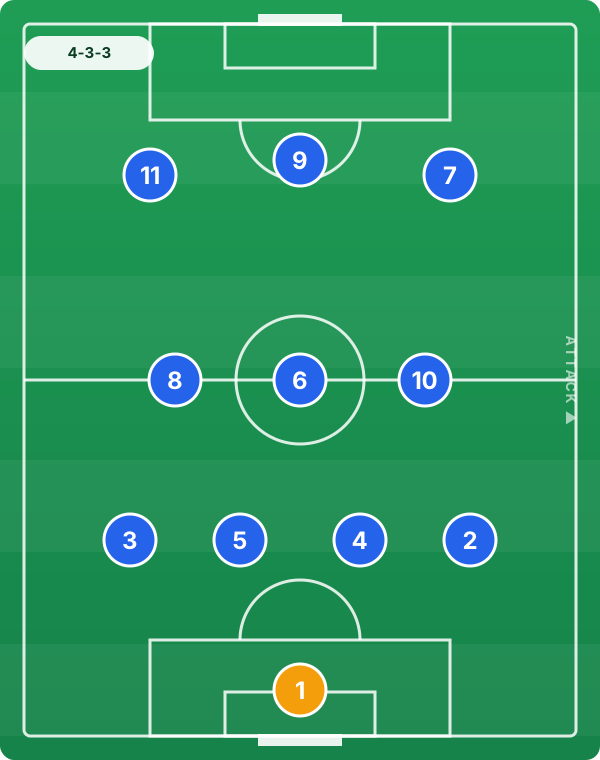
The modern 4-3-3 keeps the back four (2, 5, 4, 3), uses a midfield trio of 6 (holding), 8 and 10, and a front three of 7 (right), 9 (centre) and 11 (left).
4-2-3-1
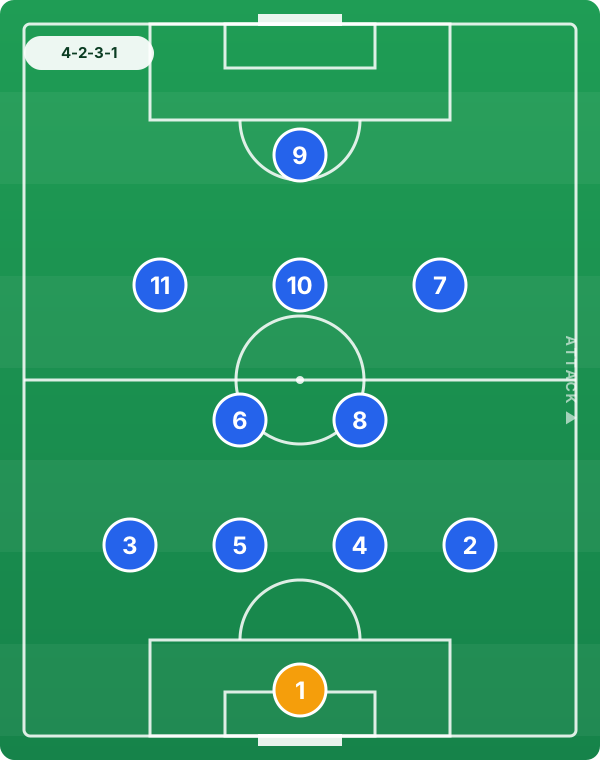
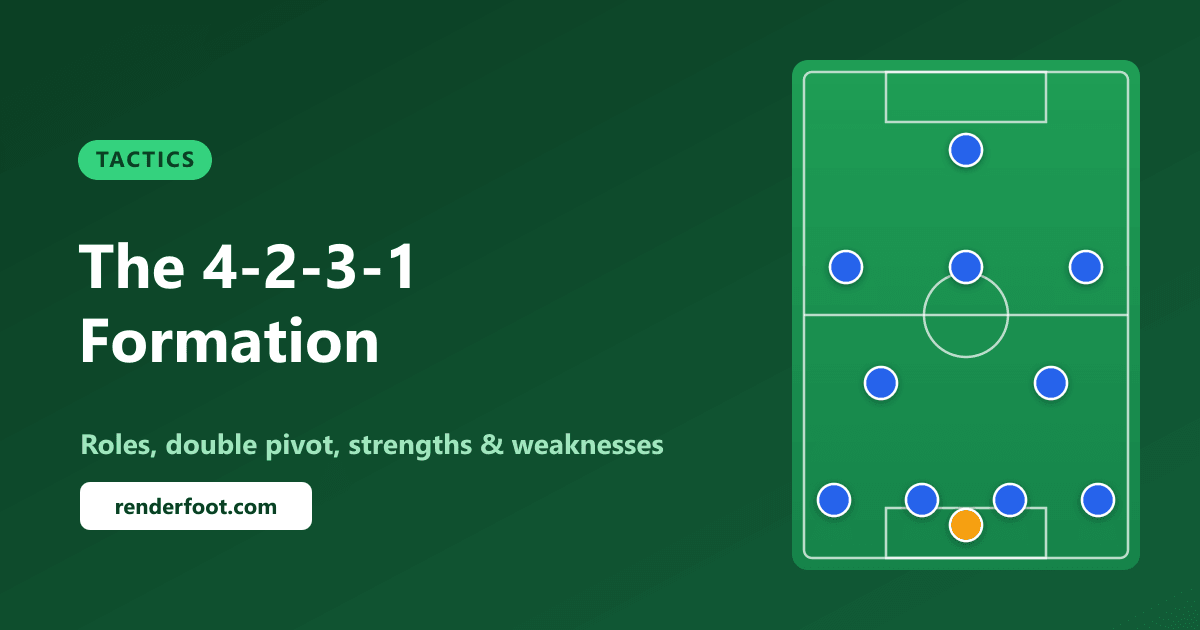
In the 4-2-3-1, the 6 and 8 form a double pivot, the 10 plays centrally behind the striker with 7 and 11 wide, and the 9 leads the line alone.
Want to see the numbers on your own team? Drop players into any shape with the free RenderFoot lineup builder.
What about squad numbers above 11?
In professional football, players are assigned a fixed squad number for the whole season, and squads are far bigger than eleven — so numbers run to 99 in most competitions. Those higher numbers carry no positional meaning at all: a 22 might be a full-back and a 17 a winger.
The 1-11 system survives in three places: youth and amateur football where shirts are handed out by position, the tactical shorthand coaches use ("the 6", "the 10"), and the prestige attached to the low numbers — which is why a signing taking the 9 or 10 shirt is treated as news.
Where the numbers come from
The system dates back to the 2-3-5 "pyramid" formation of the late 1800s, where players were numbered 1-11 from back to front: the goalkeeper was 1, the two full-backs 2 and 3, the three half-backs 4-5-6, and the five forwards 7-11. As formations evolved, the numbers stuck to roles rather than strict rows — which is why a 6 is now a defensive midfielder rather than a centre-half. For the full history, the Bundesliga's guide to positions and Wikipedia's squad-number entry are excellent references.
Note: numbering conventions vary by country and era. The English tradition numbers the holding midfielder 4 and a centre-back 6, while the modern continental system (used above) makes 6 the defensive midfielder. Both are correct — context matters.
Explore each position in depth
For a deeper look at what each role does — its responsibilities, the attributes it needs, and the modern variations — see our position guides by area of the pitch:
- Soccer defender positions — center-back, full-back, wing-back and sweeper.
- Soccer midfield positions — defensive (CDM), central (CM) and attacking (CAM) midfielders.
- Soccer forward positions — strikers, wingers and the false 9.
Frequently asked questions
What are the 11 positions in soccer?
Goalkeeper (1), right-back (2), left-back (3), two centre-backs (4 and 5), defensive midfielder (6), right winger (7), central midfielder (8), striker (9), attacking midfielder (10), and left winger (11).
What does the number 10 represent in soccer?
The number 10 represents the playmaker — the attacking midfielder who operates between the opposition's midfield and defence and creates chances for the forwards. It has become shorthand for the team's most creative player, and it is the shirt worn by Pelé, Maradona, Zidane and Messi.
What does the number 7 mean in soccer?
The 7 is traditionally the right winger — a fast, skilful wide attacker. It's also one of football's most prestigious shirts, associated with icons like Cristiano Ronaldo, George Best, and Eric Cantona.
What position is number 6 in soccer?
The defensive midfielder, sitting just in front of the back four to screen the defence and start attacks. In the older English convention, though, 6 was a centre-back — both usages exist.
What number is a CDM in soccer?
A CDM — the defensive midfielder — wears 6. The number is used as the role's name too: "playing a double 6" means fielding two holding midfielders in front of the defence.
What number does a left winger wear?
11. The left winger is 11 and the right winger is 7, which is why 7 and 11 are the two numbers most associated with wide attackers.
What number does a centre-back wear?
Usually 4 or 5. In a back four the two centre-backs take those numbers, with 2 and 3 going to the right-back and left-back.
Are football positions and soccer positions the same?
Yes. Football and soccer are the same sport, and the position names and 1-11 numbering are identical. Only the word for the game changes.
What is the hardest position in soccer?
Goalkeeper is most often ranked the hardest, because of the technical demands and the high cost of any error, with central midfielder a close second for its constant physical and decision-making load.
Build your lineup
Now that you know what every number means, put them on the pitch. Use the free RenderFoot lineup builder to assign positions and numbers, then export a clean graphic to share. For more tactics, see our guides to football formations for beginners and the best small-sided formations.