The 4-3-3 is arguably the most popular formation in modern football. From Pep Guardiola's Barcelona to Jürgen Klopp's Liverpool, the world's most successful managers have built dynasties around this versatile system. This is a deep dive into how it actually works — if you're new to tactics, start with our best football formations guide first.
The Structure
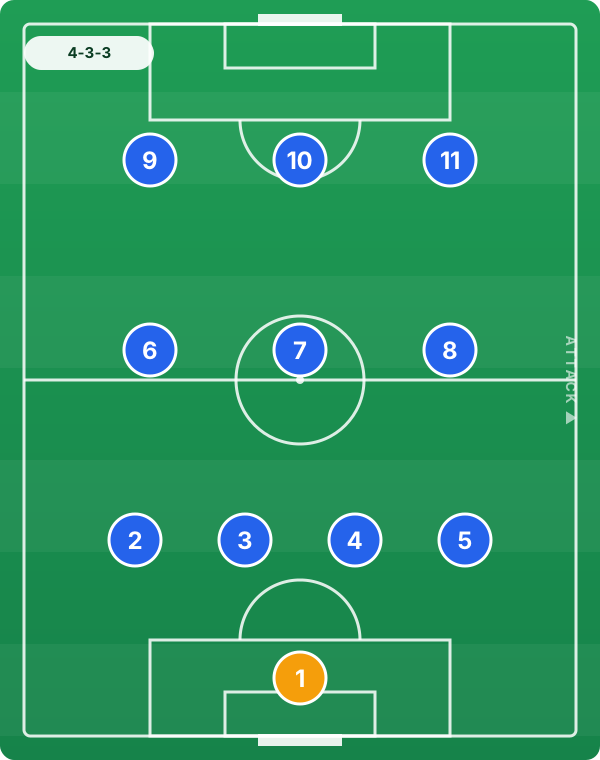
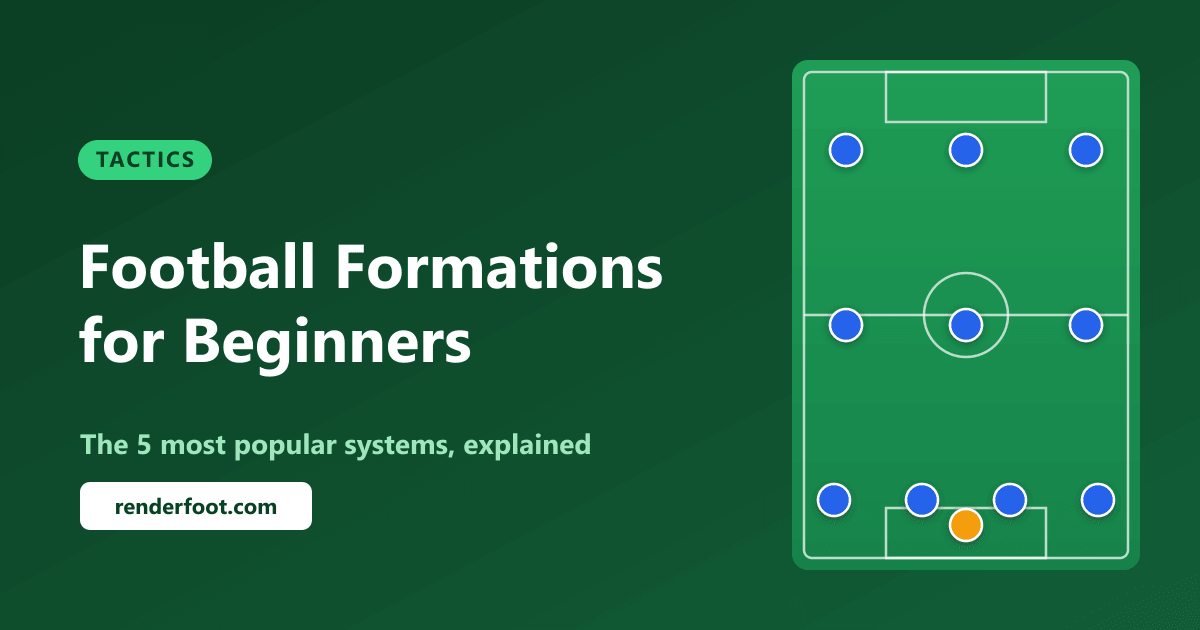
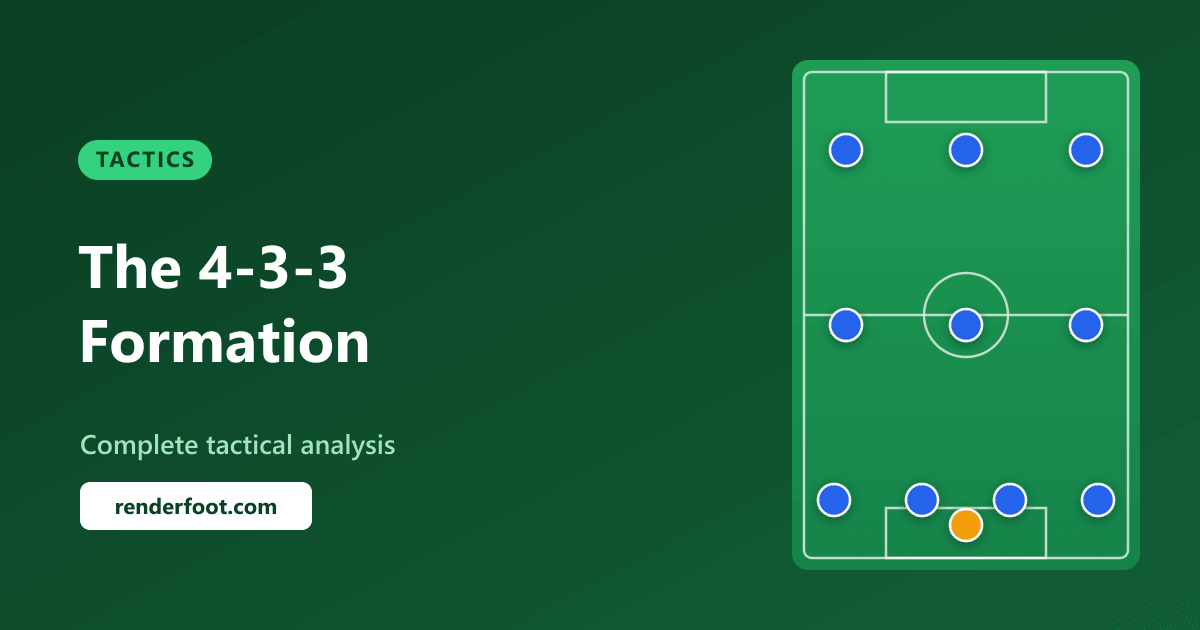
The 4-3-3 consists of:
- 4 defenders: Two centre-backs and two full-backs
- 3 midfielders: Typically one holding midfielder (CDM) and two box-to-box or advanced midfielders
- 3 forwards: A central striker flanked by two wingers
This creates natural triangles across the pitch, which is the foundation of effective ball circulation and positional play.
Key Roles in the 4-3-3
The Full-Backs: Width Providers
In a 4-3-3, full-backs are critical to providing width. When the team has possession, they push high to overlap the wingers, creating 2v1 situations on the flanks.
Modern variations:
- Overlapping full-backs — Traditional wide runs beyond the winger
- Inverted full-backs — Tucking inside into midfield (Guardiola's innovation)
- Asymmetric — One overlapping, one inverted, depending on the game plan
The Holding Midfielder: The Metronome
The single pivot (CDM) is the heartbeat of the 4-3-3. This player sits between the defence and midfield, receiving the ball from centre-backs and distributing forward.
What makes a great pivot:
- Exceptional passing range
- Positional awareness to cover defensive gaps
- Composure under pressure
- Ability to break the opposition's first line of pressing
Examples: Sergio Busquets, Rodri, Fabinho
The Wingers: Inside Threats
Modern 4-3-3 wingers are typically inverted — a right-footed player on the left, and vice versa. This allows them to cut inside and shoot, creating a constant goal threat.
Two styles of 4-3-3 wingers:
- Inverted wingers — Cut inside to shoot or play through balls (Salah, Mbappé)
- Traditional wingers — Stay wide and deliver crosses (classic style, less common now)
Pressing in the 4-3-3
One of the 4-3-3's greatest strengths is its pressing structure. The three forwards form the first line of pressure, with clear triggers and zones.
Pressing Triggers
- Goalkeeper distribution — The striker presses the centre-back receiving the ball, while wingers cut passing lanes to full-backs
- Backward passes — Any backward pass to a defender triggers immediate pressure
- Poor first touch — A heavy touch signals the team to press intensively
Pressing Shape
When pressing, the 4-3-3 effectively becomes a 4-3-3 / 4-1-4-1 hybrid:
- Striker pressures the ball
- Wingers narrow to cut central lanes
- Midfield three push up to compress space
- Back four holds a high line to keep the team compact
Weaknesses to Be Aware Of
No formation is perfect. The 4-3-3 has specific vulnerabilities:
- Exposed full-back spaces — When full-backs push high, the channels behind them are vulnerable to counter-attacks
- Midfield overload — Against a 4-5-1 or 3-5-2, the three-man midfield can be outnumbered
- Dependence on the pivot — If the holding midfielder is bypassed, the defence is exposed
- Wide areas in transition — Inverted wingers leave the wide areas open when possession is lost
Frequently Asked Questions
Is the 4-3-3 a good formation?
Yes — the 4-3-3 is one of the best modern formations for possession and pressing. Its midfield three and natural passing triangles make it excellent for controlling games, which is why Barcelona, Manchester City and Liverpool have all dominated with it. It does require technical midfielders and disciplined full-backs to cover the spaces left behind.
What is the main weakness of the 4-3-3?
The biggest vulnerability is the space behind advancing full-backs. When both push high to provide width, quick teams can counter into the channels. The single holding midfielder is also a key dependency — if he's bypassed, the back four is exposed.
What is better, the 4-3-3 or the 4-2-3-1?
The 4-3-3 offers a more dynamic midfield three and stronger pressing, while the 4-2-3-1 is more defensively secure thanks to its double pivot and adds a dedicated number 10. Choose the 4-3-3 for high-tempo possession football and the 4-2-3-1 for extra control and security.
How do you defend in a 4-3-3?
Out of possession the 4-3-3 typically shifts into a 4-1-4-1 or 4-5-1 block: the wingers drop alongside the midfield three and the striker leads the press. Compactness between the lines and clear pressing triggers — backward passes, heavy touches, goalkeeper distribution — are what make it work.
Build Your 4-3-3 Lineup
Ready to set up your own 4-3-3? Use the RenderFoot Lineup Builder to create your formation graphic, or explore our detailed 4-3-3 formation page for position-by-position analysis, strengths, weaknesses, and step-by-step setup instructions.