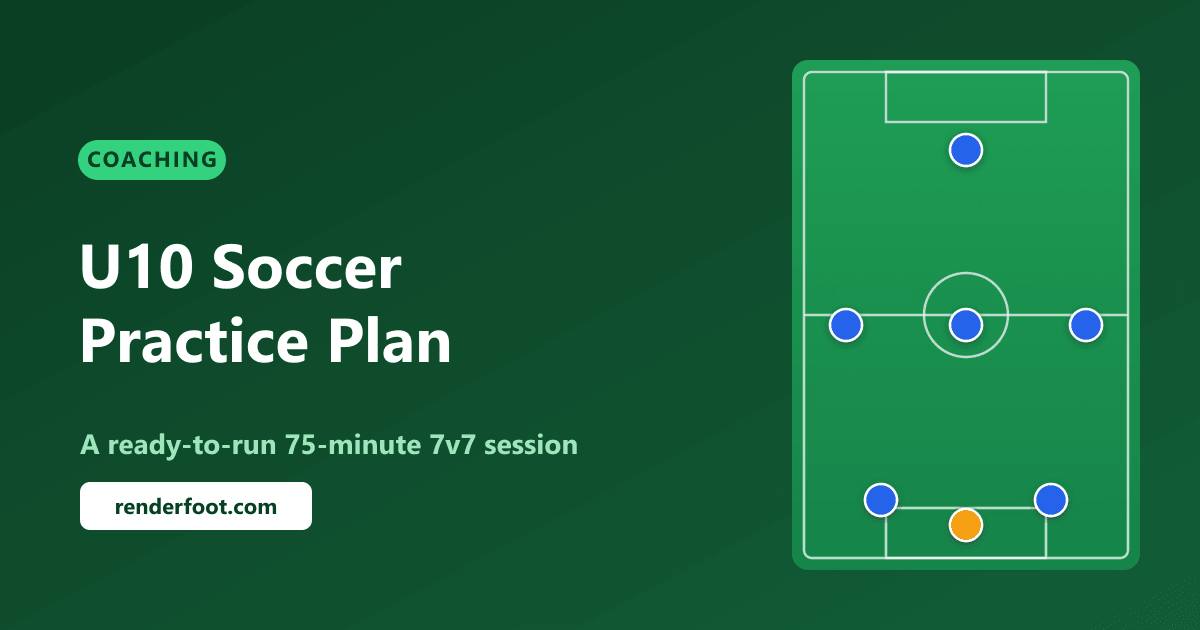
A U10 practice runs about 75 minutes and is built from five blocks — a ball-mastery warm-up, a 1v1 dribbling game, a passing and support activity, an attacking or defending topic, and a 7v7 scrimmage to finish. This is the age where players step up to a goalkeeper, offside and the build-out line for the first time, so the session has to do two jobs at once: keep the ball at their feet, and teach them what 7v7 actually asks of them.
Below is the full session, five drills you can run straight off the page, and the U.S. Soccer standards that shape all of it. Skip to the 75-minute plan, the drills, or the printable template.
The 75-minute U10 practice plan
| Block | Time | Focus | Activity |
|---|---|---|---|
| 1. Warm-up | 10 min | Touches, agility | Ball mastery + dynamic stretches |
| 2. Dribbling | 15 min | Beating a player 1v1 | 1v1 to the Gates |
| 3. Passing | 15 min | Support angles, third man | Pass and Support |
| 4. Game topic | 15 min | Attacking 2v1 or defending 1v1 | 2v1 to Goal / Jockey and Show |
| 5. Small-sided game | 15 min | Playing 7v7 | Free 7v7 with build-out line |
| 6. Cool-down | 5 min | Calm + review | Juggling + two questions |
Take a water break between blocks 2–3 and 4–5. Rotate the block-4 topic week to week — attacking one session, defending the next — so a month covers both without ever running a 75-minute lecture.
Build and reuse your own version of this session in the free RenderFoot drill planner, then print it for the sideline.
What changes at U10
Nine- and ten-year-olds move from the 4v4 free-for-all of U8 into a recognisable game. Per U.S. Soccer's Player Development Initiatives, the official 10U standards are:
- Format: 7v7, with a goalkeeper
- Ball: size 4
- Field: 55–65 yards long by 35–45 yards wide
- Goals: maximum 6.5 ft high by 18.5 ft wide
- Game length: two 25-minute halves
- Build-out line: yes — and offside is judged from it
- Heading: not permitted
Three of those are new, and all three should show up in your sessions: there is now a keeper to play around, there is an offside line, and the build-out line explicitly rewards playing out from the back instead of hoofing it.
The build-out line, in one diagram
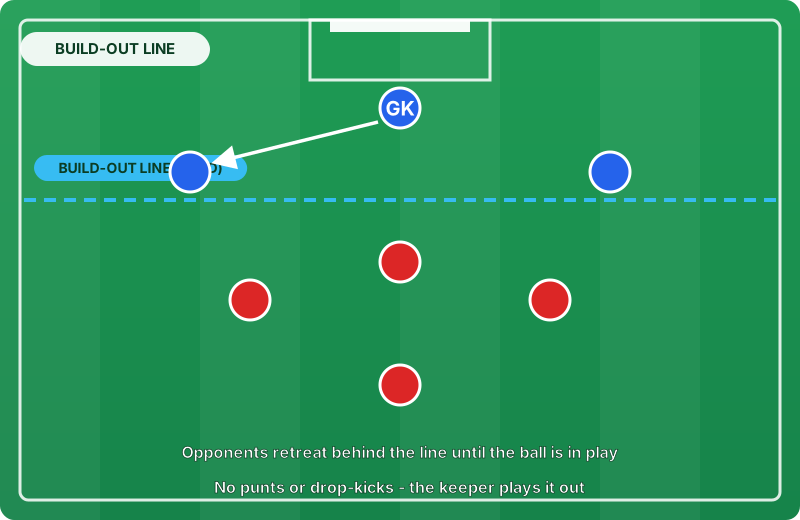
The build-out line is drawn from touchline to touchline 14 yards in front of each goal. When the goalkeeper has the ball in their hands or a goal kick is taken, the opposing team must retreat behind it until the ball is put back into play. The keeper may not punt or drop-kick — the ball has to be played out.
It also moves the offside line: at 7v7 a player cannot be offside between the halfway line and the build-out line. (Below 9U there is no offside at all.) If your players are asking what offside means now that it applies to them, our offside rule guide has a simulator they can drag around.
Practically, it means your defenders should be wide and deep whenever the keeper has it, and your team gets a few free seconds to play a real pass. Coach that on purpose — it's the single biggest habit U10 sets up for later.
5 U10 drills, step by step
Each drill maps to a block in the plan. Press Play on any diagram to watch the movement.
1. 1v1 to the Gates (dribbling)
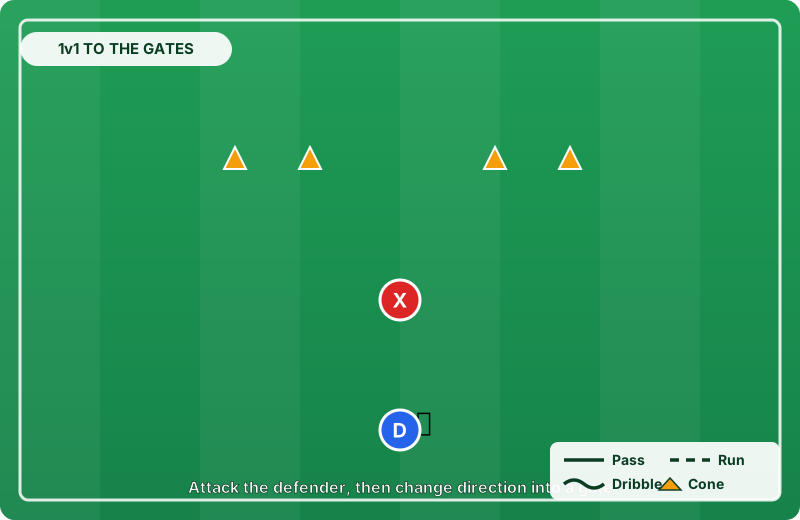
Set a 20×25-yard area with two cone gates along the far line. The attacker starts with the ball and must dribble through either gate; the defender starts passive and gets more active each round. Two gates is the whole coaching point — it gives the attacker a genuine choice, so the defender can't just guess.
Cue: run at the defender, not around them. Change direction only once they've committed their weight.
2. Pass and Support (passing)
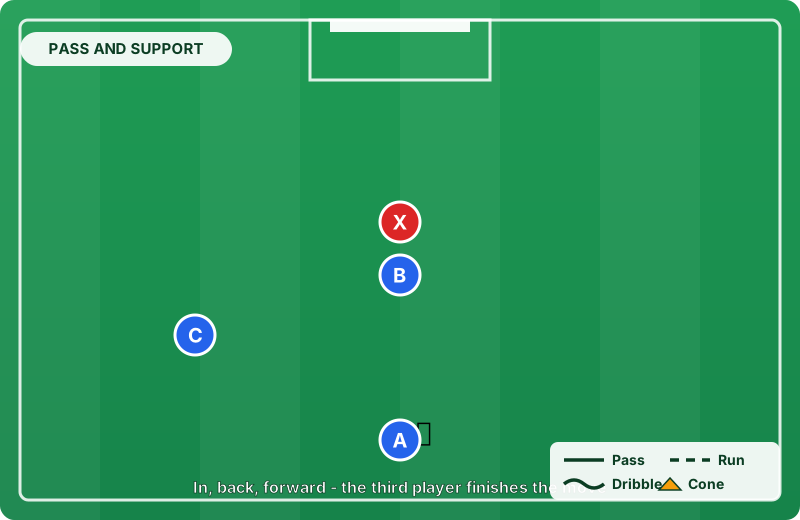
Three attackers and one passive defender in a 30×25-yard area. A passes into B, who has their back to goal and is marked; B lays it off first-time to C; C plays it forward for A, who has kept running. Rotate positions every two minutes.
This is a third-man run in its simplest form, and U10 is exactly the right age for it — the ball goes in, comes back out, and goes forward past a defender who followed the wrong player.
Cue: B never turns into pressure. One touch back is faster than any turn.
3. 2v1 to Goal (attacking)
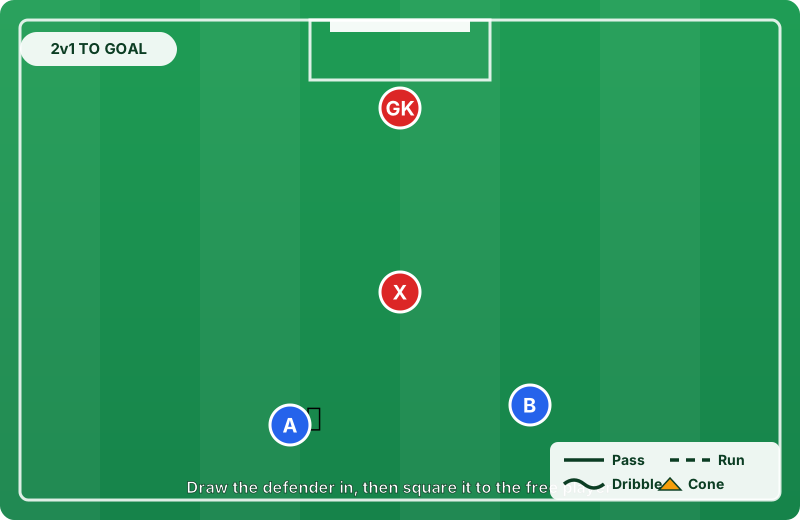
Two attackers against one defender and a keeper, starting 35 yards out. The player on the ball must carry it at the defender until they commit, then release. If the defender ignores the ball carrier, they shoot; if the defender steps across, they square it.
Cue: make the defender choose. Passing too early lets one defender cover two players.
4. Jockey and Show (defending)
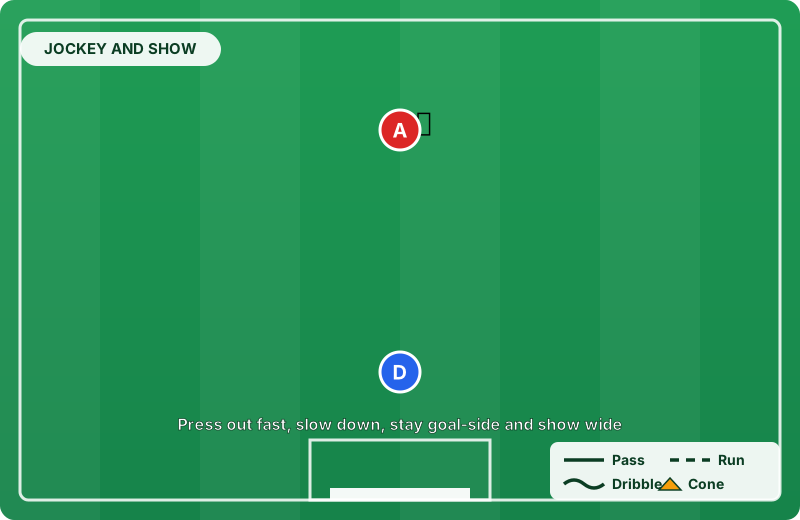
One attacker dribbling at goal, one defender starting 20 yards in front of it. The defender's job is not to win the ball — it's to delay and steer the attacker away from goal. Award a point for forcing the attacker to the touchline, not for tackles.
Three-part cue: close the space fast, slow down as you arrive, then side-on and patient. Sprinting straight through the attacker is the most common U10 defending error.
5. Play 7v7 (small-sided game)
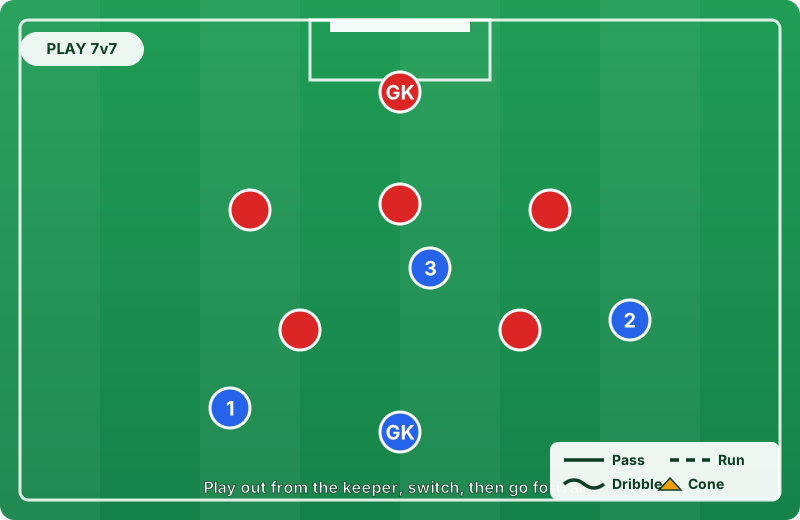
Finish with a real 7v7 on roughly 60×40 yards, with the build-out line marked. Enforce the retreat — it's the only way players learn to use it. A 2-3-1 is the friendliest starting shape at this age; our small-sided formations guide and 7v7 formations cover the alternatives.
Let them play. Two or three coaching moments across fifteen minutes is plenty.
U10 coaching tips
- Every drill has a defender. At U8 you can get away with unopposed work; at U10 decisions matter more than technique, and decisions need an opponent.
- Play out from the back every time, even when it goes wrong. The build-out line exists to make those mistakes cheap.
- No heading. U.S. Soccer's concussion initiative prohibits heading for players 10 and under, in games and in training.
- Rotate the goalkeeper. Everyone should have a turn in goal this season, not the same child every week.
- Keep talking short. Under 45 seconds per stoppage, demonstrated rather than described.
Free printable U10 practice plan template
Recreate the 75-minute table above in the free RenderFoot drill planner, drop in the five drills, and export a one-page PDF you can print and take to the field. Change one block a week and a single template will carry a whole season.
Frequently asked questions
How long should a U10 soccer practice be?
About 75 minutes. That fits five short blocks and a cool-down without losing focus, which is roughly the ceiling for nine- and ten-year-olds.
What size field and ball do U10 players use?
U.S. Soccer specifies 7v7 with a goalkeeper on a 55–65 × 35–45 yard field, with goals up to 6.5 ft × 18.5 ft, a size 4 ball, and two 25-minute halves.
What is the build-out line in U10 soccer?
A line 14 yards from each goal. When the keeper has the ball or a goal kick is taken, the opposition must retreat behind it until the ball is in play, and the keeper may not punt or drop-kick. Offside is also judged from it rather than the halfway line.
Is there offside in U10 soccer?
Yes, but only between the build-out line and the goal line. There is no offside offence between the halfway line and the build-out line, and no offside at all below the 9U age group.
What should U10 players focus on?
Beating a player 1v1, receiving on the half-turn, and the first ideas of support and defending angles — all inside games rather than lines. Positions and set tactics can wait.
Can U10 players head the ball?
No. Heading is not permitted for players 10 and under, in matches or in practice.
Take it to the field
You now have a 75-minute U10 session, five animated drills, and the 7v7 standards behind them. Build your version in the free RenderFoot drill planner, and pull extra activities from our passing drills, dribbling drills and defending drills guides.
Coming from the younger group? Start with the U8 practice plan. Moving up next season? The U12 practice plan makes the jump to 9v9.
Sources: U.S. Soccer Player Development Initiatives; U.S. Soccer: the concussion initiative and reducing heading; IFAB Laws of the Game, Law 11 — Offside.