Soccer is the world's most popular sport, and it's easy to start playing: you just need a ball, some space, and a goal. This beginner's guide walks you through everything step by step — the object of the game, the basic rules, the positions, the core skills, and how to get better.
The object of the game
Two teams of 11 players try to score by getting the ball into the opponent's goal. The team with the most goals at the end wins. You can use any part of your body except your hands and arms — only the goalkeeper can use their hands, and only in their own penalty area. That's the whole game in a sentence; everything else is detail.
Step 1: Learn the basic rules
You don't need to memorise the rulebook to start, but a few rules matter from day one:
- No hands (except the keeper in their box).
- Throw-in to restart when the ball goes out the side; corner or goal kick when it goes out the ends.
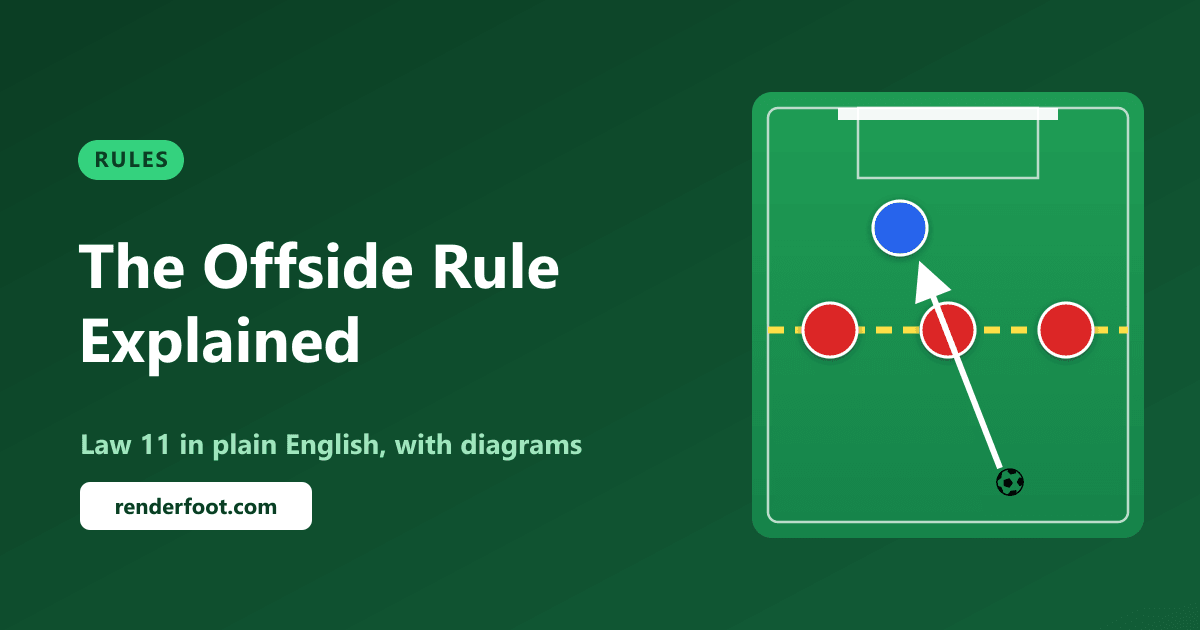
- Offside — you can't be ahead of the last defender when the ball is played to you (the one rule worth learning early).
- Fouls like tripping or pushing give the other team a free kick.
For the full breakdown, read our rules of soccer guide.
Step 2: Understand the positions
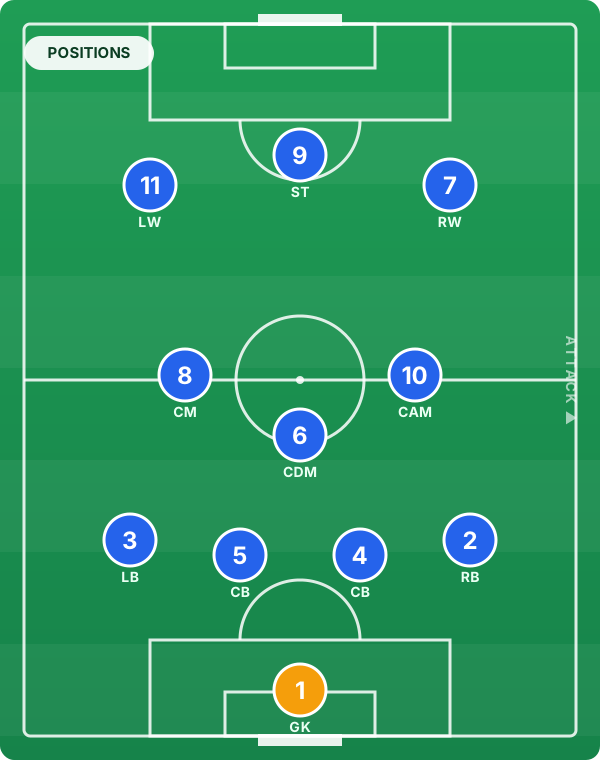
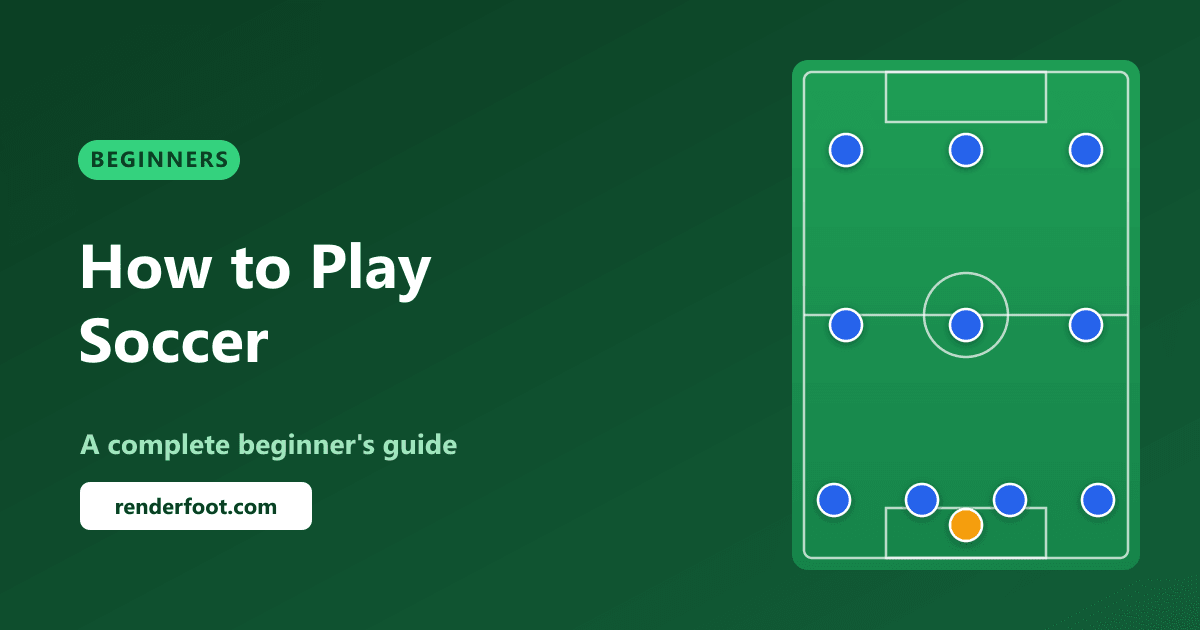
Every team is built from four types of players:
- Goalkeeper — guards the goal; the only one who can use their hands.
- Defenders — stop the other team scoring. See defender positions.
- Midfielders — link defence and attack and control the game. See midfield positions.
- Forwards — score the goals. See forward positions.
For the full system, including shirt numbers, read soccer positions and numbers.
Step 3: Master the core skills
Four basic skills will let you play the game:
- Dribbling — moving with the ball using small touches. (Dribbling drills)
- Passing — moving the ball to a teammate accurately. (Passing drills)
- Receiving (first touch) — controlling the ball when it comes to you.
- Shooting — striking the ball at goal. (Shooting drills)
Start with dribbling and passing — they're the skills you'll use most. Our soccer drills guide has simple drills for every one.
Step 4: Get the basics of teamwork
Soccer is a team game. Two simple ideas go a long way for beginners:
- Spread out. Don't all chase the ball — give your teammates space and passing options.
- Pass and move. After you pass, move into space to get the ball back.
Step 5: How to get better
Improvement comes from touches and reps:
- Practice with the ball every day — even 15 minutes of dribbling and passing against a wall helps.
- Play small-sided games (like 5v5 or 7v7) — more touches than the full game.
- Watch and learn — notice where good players move without the ball.
- Stay fit — soccer rewards stamina and quick feet.
What you need to start
- A size 5 ball (size 3 or 4 for younger kids)
- Comfortable footwear (soccer cleats if playing on grass)
- Shin guards for matches
- A goal or two markers — and someone to play with
Frequently asked questions
How do you play soccer for beginners?
Two teams try to score by getting the ball into the goal using any body part except the hands (only the goalkeeper can use hands, in their own area). Start by learning a few basic rules, the four types of position, and the core skills — dribbling, passing, first touch and shooting. The fastest way to learn is to play small-sided games with lots of touches.
What are the basic skills needed to play soccer?
The four basic skills are dribbling (moving with the ball), passing (giving it to a teammate), receiving or first touch (controlling it), and shooting (striking at goal). Defending is the fifth. Beginners should focus first on dribbling and passing, the skills used most in a game.
Is soccer hard to learn?
Soccer is easy to start but takes time to master. The basic idea and rules can be picked up in minutes, and you can enjoy a game almost immediately. Developing good technique and game understanding takes regular practice — but the low barrier to entry is part of why it's the world's most popular sport.
What position should a beginner play?
Beginners often start in midfield or as a full-back, where they get plenty of touches and can learn both attacking and defending without too much pressure. Avoid putting a complete beginner in goal or as a lone striker, where mistakes are most exposed — and rotate positions to learn the whole game.
Start playing
Set up your first team and formation with the free RenderFoot lineup builder, learn the rules of soccer, and work through the soccer drills guide to build your skills.