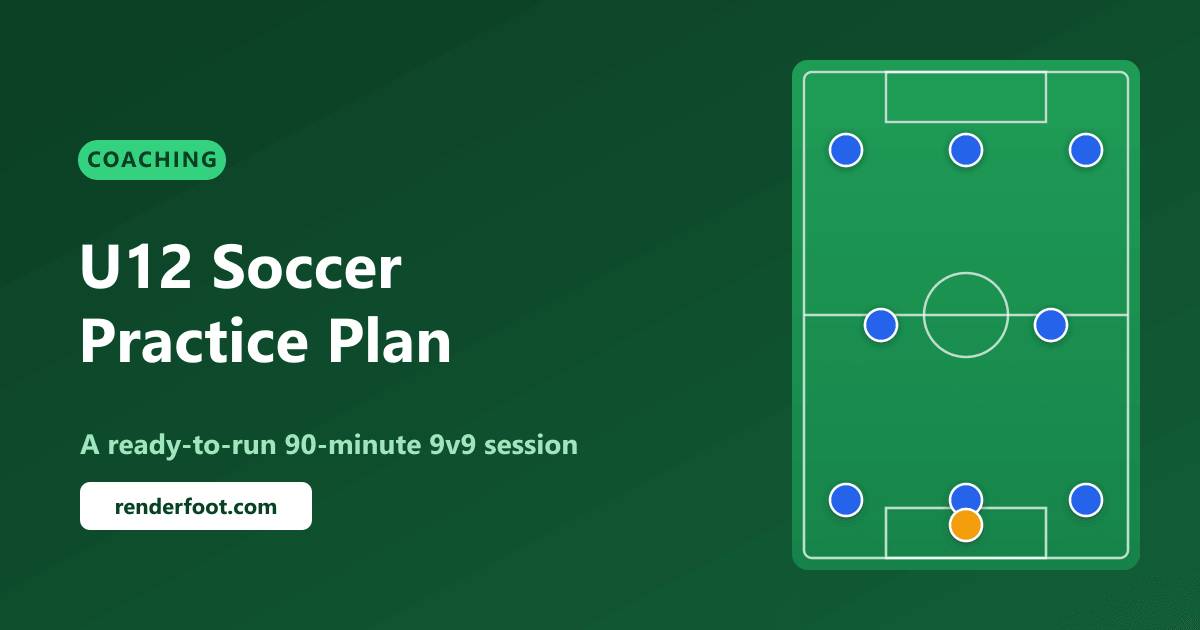
A U12 practice runs about 90 minutes: a rondo warm-up, a possession or switching activity, a game-topic block (pressing, crossing or defending), and a 9v9 scrimmage. This is the last small-sided year before 11v11, and the step from 7v7 to 9v9 adds the two things the full game is really made of — width you can't cover alone, and a midfield that has to be organised.
Below is the session, five drills with animated diagrams, the 9v9 shapes worth teaching, and the U.S. Soccer standards behind it. Skip to the 90-minute plan, the drills, or the printable template.
The 90-minute U12 practice plan
| Block | Time | Focus | Activity |
|---|---|---|---|
| 1. Warm-up rondo | 15 min | First touch under pressure | 4v2 Rondo |
| 2. Possession | 20 min | Width, switching play | Switch the Play |
| 3. Game topic | 20 min | Pressing or attacking | Pressing Trigger / Cross and Finish |
| 4. Small-sided game | 25 min | Playing 9v9 | Free 9v9 |
| 5. Cool-down | 10 min | Stretch + review | Static stretches + three questions |
Water breaks go between blocks 1–2 and 3–4. Rotate the block-3 topic across the month — pressing one week, finishing the next — so players get a full picture without a single session ever turning into a lecture.
Build and save your own version in the free RenderFoot drill planner and print it for the sideline.
What changes at 9v9
Eleven- and twelve-year-olds can finally hold a shape and think one pass ahead. Per U.S. Soccer's Player Development Initiatives, the official 12U standards are:
- Format: 9v9, with a goalkeeper
- Ball: size 4
- Field: 70–80 yards long by 45–55 yards wide
- Goals: maximum 7 ft high by 21 ft wide
- Game length: two 30-minute halves
- Build-out line: no — offside now applies from the halfway line
- Heading: restricted (see below)
Two of those matter more than the rest. The build-out line is gone, so playing out from the back is no longer protected — your keeper and defenders have to earn the space. And the field is roughly 40% bigger than 7v7, which is exactly why switching play becomes a coaching topic for the first time.
Offside also now works exactly as it does in the adult game, judged from the halfway line. If your players are still guessing at it, send them to our offside rule guide — it has a simulator they can drag around.
9v9 shapes worth teaching
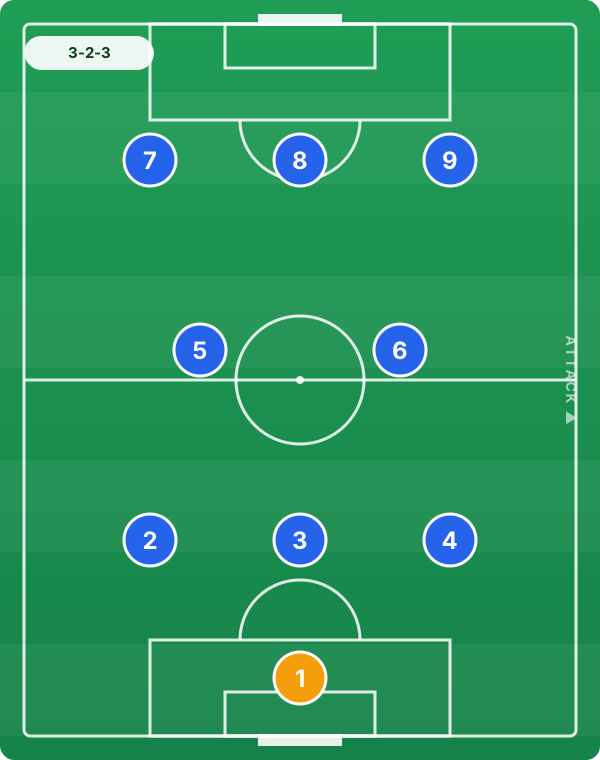
3-2-3 is the natural 9v9 shape and the best preparation for 11v11. Three at the back mirrors a back four's spacing, the two central midfielders learn to cover for each other, and the three forwards force players to hold real width.
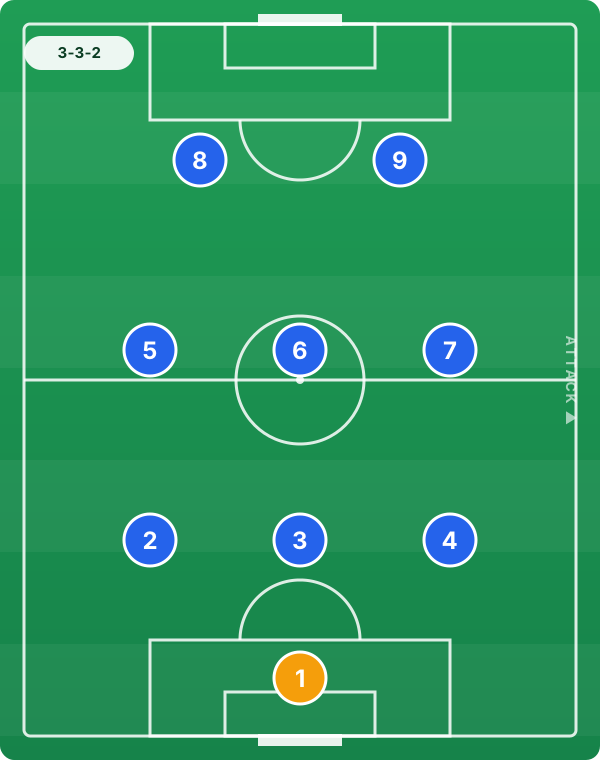
3-3-2 trades a forward for a third midfielder. It's the safer option against a strong opponent, and it gives you a spare player in the middle when your team is losing the second ball. Our small-sided formations guide covers how these scale up and down.
5 U12 drills, step by step
Press Play on any diagram to watch the movement.
1. 4v2 Rondo (warm-up)
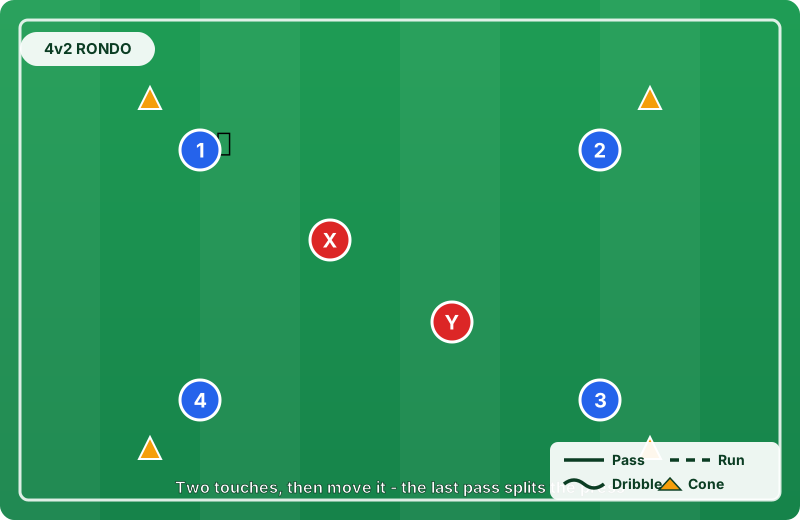
Four players on the outside of a 12×12-yard square, two defenders inside. Two-touch maximum. Defenders swap in when they win it or force it out. Run it as the warm-up every single week — it's the highest-value fifteen minutes in youth soccer.
Cue: check your shoulder before the ball arrives. The pass through the middle is worth two points, so players learn to look for it rather than passing around the outside forever.
2. Switch the Play (possession)
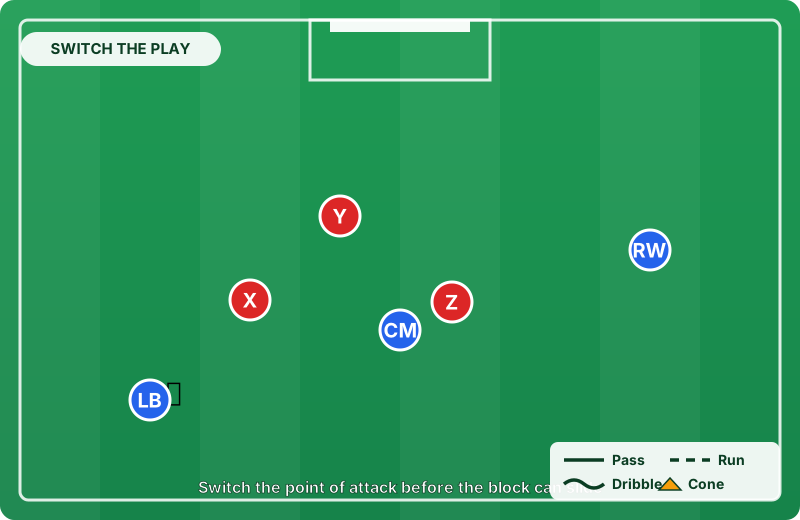
A 40×50-yard area with a channel down each touchline. The team in possession scores by getting the ball from one channel to the other in three passes or fewer. Defenders can't enter the channels.
This is the drill that teaches U12 players why width exists. The picture you want is simple: the ball goes into midfield, the opposition slides toward it, and the switch goes to the player they just left.
Cue: head up before the ball arrives, not after. The switch is only on for about a second.
3. Pressing Trigger (defending)
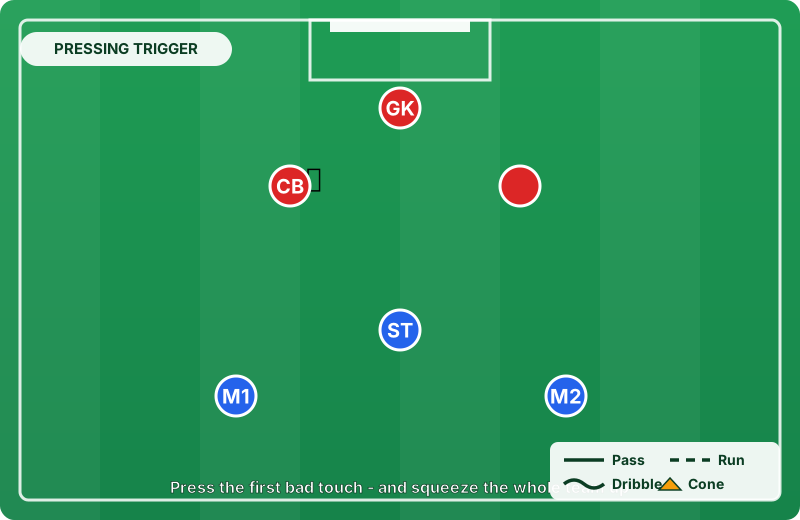
A back three plus a keeper try to play out against a front three. The pressing team may only start pressing on an agreed trigger: a heavy touch, a backward pass, or a pass to a defender facing their own goal.
The key detail is that the striker curves the run to cut off one side rather than sprinting straight at the ball, and the midfielders push up behind him. A single player pressing alone is worse than nobody pressing.
Cue: one goes, everyone goes.
4. Cross and Finish (attacking)
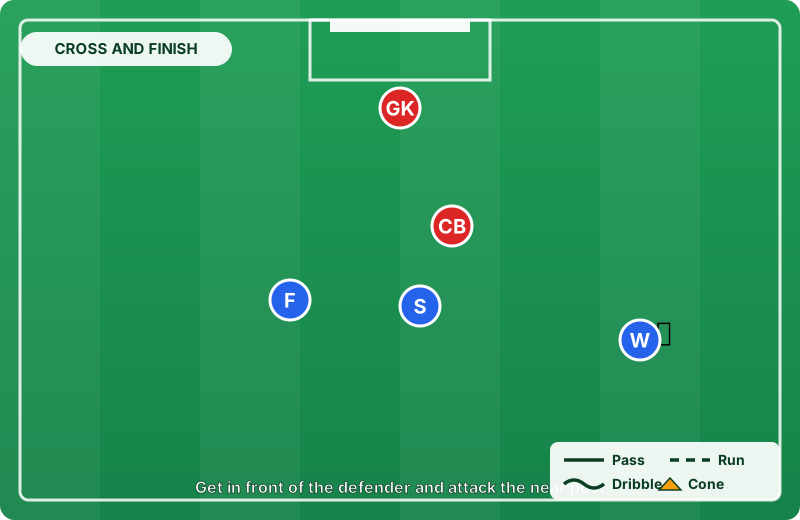
A winger starting wide, a striker, a far-post runner, one defender and a keeper. The winger drives to the byline and pulls the ball back to the near post; the striker attacks in front of the defender; the third player fills the far post.
Two runners is the whole point — one near, one far. Alternate sides each round so both feet get used.
Cue: the near-post run beats the defender, not the ball.
5. Play 9v9 (small-sided game)
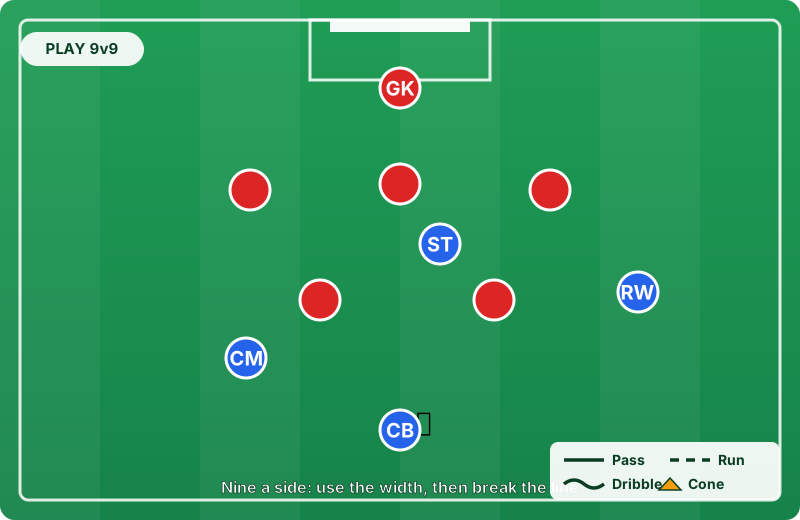
Finish with a genuine 9v9 on roughly 75×50 yards, with offside enforced. Set one condition per session that matches the day's topic — a goal counts double after a switch of play, or you may only press on a backward pass — and then let them play.
Twenty-five minutes of game time with two or three coaching moments will teach more than another drill.
U12 coaching tips
- Rondo every session. Non-negotiable. It's the warm-up, the technical work and the decision-making all at once.
- Coach the picture, not the position. "Where's your spare player?" beats "stand there."
- Heading is restricted. U.S. Soccer's concussion initiative bans heading for players 10 and under and limits it for ages 11–13, with heading restricted to practice. Check your league's rule set before you plan any heading work.
- Everyone plays two positions this season. The 9v9 year is the cheapest time to find out that your winger is a centre-back.
- Let mistakes happen in the game. Stopping a 9v9 every ninety seconds trains players to wait for instructions.
Free printable U12 practice plan template
Copy the 90-minute table above into the free RenderFoot drill planner, add the five drills, and export a one-page PDF for the sideline. Swap one block a week and the same template runs a full season.
Frequently asked questions
How long should a U12 soccer practice be?
About 90 minutes — a rondo warm-up, two topic blocks, a 9v9 game and a cool-down. Eleven- and twelve-year-olds can sustain that if the blocks keep moving.
What size field and ball do U12 players use?
U.S. Soccer specifies 9v9 with a goalkeeper on a 70–80 × 45–55 yard field, with goals up to 7 ft × 21 ft, a size 4 ball, and two 30-minute halves.
Is there a build-out line in U12 soccer?
No. The build-out line applies to the 7v7 age groups. At 9v9 the opposition can press a goal kick, and offside is judged from the halfway line as in the adult game.
What is the best formation for 9v9?
3-2-3 is the standard and the best bridge to 11v11 — three defenders, two central midfielders and three forwards. 3-3-2 is the more conservative alternative when you need an extra body in midfield.
Can U12 players head the ball?
Heading is banned for players 10 and under and restricted for ages 11 to 13 under U.S. Soccer's guidelines, with heading limited to practice. Confirm what your own league permits before including it.
What should U12 players focus on?
Playing under pressure in tight spaces (rondos), using the width of a bigger field, and the first team-wide defensive ideas — pressing triggers and covering for a team-mate.
Take it to the field
You now have a 90-minute U12 session, five animated drills, and the 9v9 standards behind them. Build your version in the free RenderFoot drill planner, map the shapes on the tactical board, and pull more activities from our passing drills, shooting drills and defending drills guides.
Coaching the year below? Start with the U10 practice plan. Getting ready for 11v11? Our guides to midfield positions and the best formations for beginners are the next step.
Sources: U.S. Soccer Player Development Initiatives; U.S. Soccer: the concussion initiative and reducing heading; IFAB Laws of the Game.